Meta's Project Gryffindor: Instagram Is Recruiting in Schools
NPR found internal Meta documents showing Instagram used schools to recruit teens. What Project Gryffindor is, what your child sees, and what parents can do.
Drafted with an AI writing assistant and checked against its sources by the editor before publishing. How we use AI.
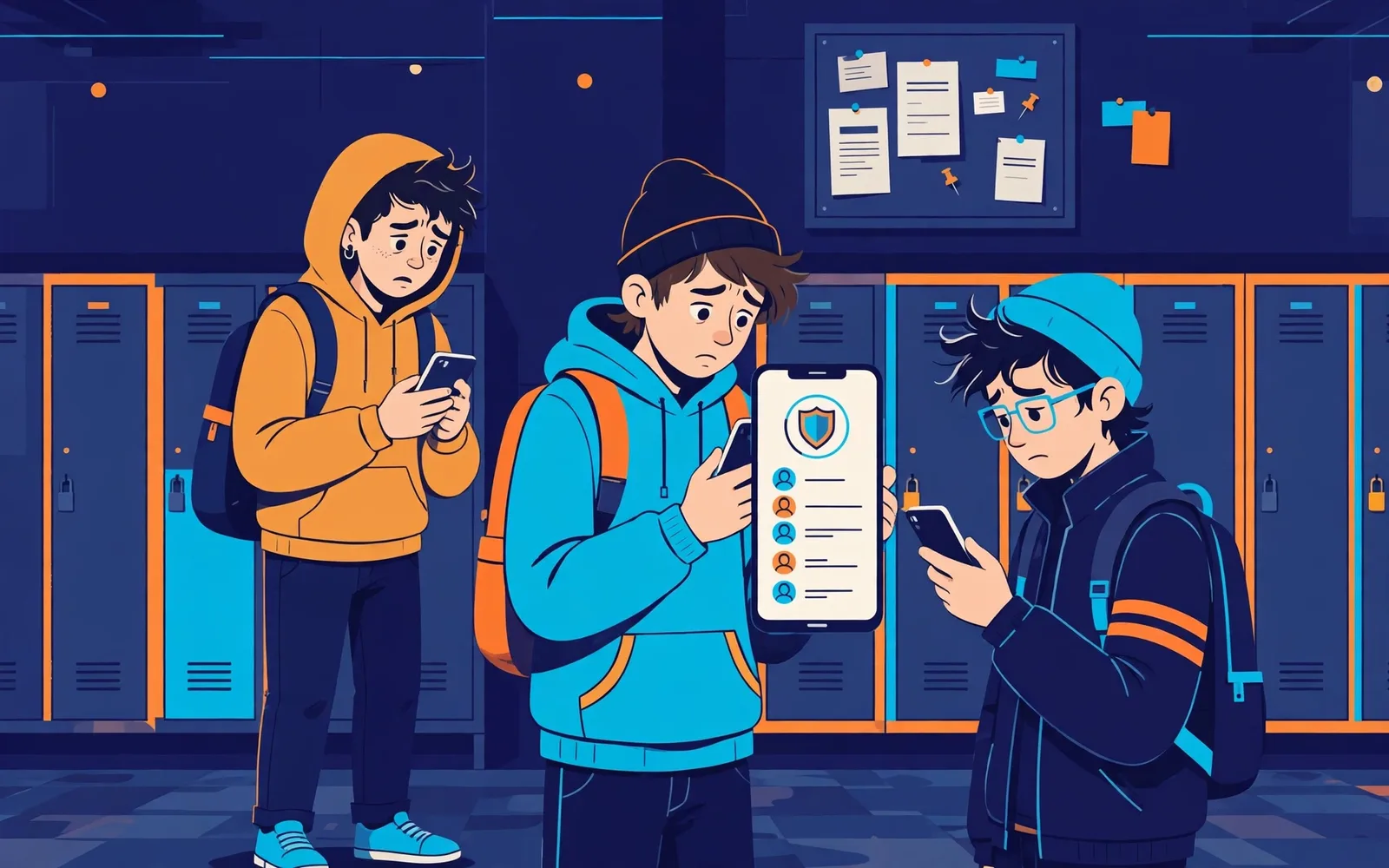
Project Gryffindor was Meta's internal name for using US schools to grow Instagram among teenagers: school banners on profiles, student directories, and push notifications called 'school blasts', rolled out as a School Partnership Program that reached nearly 17,000 schools by September 2026 — while internal documents described the goal as user acquisition, not safety.
There is a name for the programme that put your child's school on Instagram, and it comes straight out of a children's book about a school for wizards. Meta called it Project Gryffindor. NPR reported on 18 November 2026 that internal Meta documents, obtained by lawyers through discovery in the multidistrict lawsuit against the social platforms, show the company spent years planning to use American schools as a way to recruit teenagers onto Instagram — school banners on profiles, directories of classmates, and push notifications aimed at whole schools at once. Meta says the programme is about safety. Its own documents describe something else: acquisition, friending and invites.
That distinction is the whole story. This is not a rumour about a feature your child might see one day. By September 2026, when Meta announced a big expansion of what it publicly calls its School Partnership Program, the company said nearly 17,000 schools had already signed up. If your teenager goes to one of them, the school is already inside their Instagram account — or the invitation to put it there is one tap away. And the internal paperwork NPR reviewed suggests that was the point all along.
The short version
Project Gryffindor was Meta's internal codename for growing Instagram's teen user base through schools. A 2023 presentation titled "Unlocking New Networks Through School Communities" said the programme would "give teens a new reason to join / find more value in IG [Instagram]". A 2024 deck on Project Gryffindor described embedding in schools as a way to increase user "acquisition", "friending" and "invites" to join Instagram, and added: "We believe network connections will fuel organic and unattributed acquisition." The public version, launched in 2025 and expanded on 29 September 2026, lets verified students display a school banner on their profile, browse a directory of other students at their school, and receive school-related stories and notes. Meta insists it is a safety and communication tool. Online safety experts told NPR it could do the opposite: hand scammers, sextortionists and groomers a map of exactly where a child goes to school, which is one of the first things they try to find out.
How NPR found out
The documents were not leaked by a whistleblower and they were not volunteered by Meta. They surfaced in the multidistrict litigation in which children and their families, school districts and state attorneys general allege that social media platforms were designed to be harmful to users under 18, and that the companies knew about the risks and failed to disclose them. Meta, TikTok, Google and Snap are all defendants in those cases. Lawyers obtained Meta's internal presentations through discovery, and NPR — reporting by Tarbell AI fellow Katie McQue — reviewed them and published the findings on 18 November 2026. NPR's investigation
That provenance matters, because it is also why the documents are so blunt. Internal decks written for colleagues do not use the careful language of a press release. They say what the programme was for. And what they say, again and again, is growth.
What the documents actually say
Start with 2023. Meta's presentation "Unlocking New Networks Through School Communities" was written at a moment when the company was worried about a specific problem: there were "full communities of teens that have not yet joined IG". Its existing approach — "relying on power user teens to get less active friends onto IG" — was, in the deck's own words, "may not be effective" for those communities. Schools were the answer. The deck asked, in plain terms: "Our competitors in social connection are leveraging school integrations as a way to keep in touch with their community. Can we take things a step further and use school networks as a lever for acquisitions?"
By 2024 the plan had a name and a sharper brief. Project Gryffindor — named for one of the four Hogwarts houses in the Harry Potter books — treated embedding in schools as a channel for user "acquisition", "friending" and "invites". The line that has travelled furthest since the story broke is the one about organic growth: "We believe network connections will fuel organic and unattributed acquisition." Unattributed is the telling word. It means sign-ups that do not look like marketing. A teenager joins because their school is there, their friends are there, their team is there — not because an advert told them to.
The documents go back further than 2023. NPR reports that as early as 2015, Meta was making plans to form relationships with schools to acquire new teen users. A legal brief filed in 2025 on behalf of school districts and boards of education across the country quoted a 2015 internal comment from a Meta employee describing the company's engagement goals in a way that should stop any parent in their tracks: "One of the things we need to optimize for is sneaking a look at your phone under your desk in the middle of Chemistry :)."
That is not a safety goal. It is a classroom-distraction goal, written down, in a company that would later tell the public: "We don't want social media to be a distraction from school."
Why Meta wanted schools so badly
To understand why a company worth trillions would spend a decade courting school districts, you have to go back to 2018, when TikTok launched in the United States. Internal documents submitted in the same lawsuit describe the slowdown in teen Instagram growth after TikTok's arrival as "an existential threat for not just IG [Instagram] but the company overall". Teenagers are the pipeline. Lose them and you lose the next decade of users, because the people who join young stay longest.
Meta's own research said so explicitly. Another internal presentation, focused on the long-term retention of users on Facebook, carried this bullet point: "Tweens (approximate age 10-12) are special. People who join Facebook as tweens have the highest long term retention out of all age groups." Facebook and Instagram both require users to be at least 13. But the documents show the company thinking carefully about the years just below that line — and about how acquiring teenagers has a knock-on effect. "Teens strongly influenced preteens' understanding of what and how frequently to share on Instagram," one document said. Get the older sibling, and the younger one follows.
That is the commercial logic of Project Gryffindor. A school is the one place where every teenager in a town is already gathered, already sorted into year groups, already connected to each other in real life. Turn that real-life network into an Instagram network and the sign-ups arrive by themselves — organic and unattributed, exactly as the deck promised.
What your child actually sees
Strip away the internal language and the programme, as it exists on a teenager's phone today, looks friendly and almost boring. That is part of the point. Here is what Meta's 29 September 2026 announcement says students at a participating school get:
A school banner on their profile. Verified students can display their school's name and colours, visible to other teens they follow. It is the digital equivalent of wearing the school hoodie — except a hoodie does not travel with you into a stranger's direct messages.
A student directory. Students can see a directory of other students at their school. Meta also added Clubs and Teams, so administrators, educators and students can add groups like a school's maths club or football team as hubs for announcements.
School Stories and Notes. School-related accounts can post stories and notes visible to all verified students and parents in the school community. Meta's announcement gave the example of a school using Instagram Stories to share a notice about basketball tryouts.
Channels. Schools can share quick updates with followers, including parents and the wider community. Only school administrators can post to these.
Verification through a third party. Students are verified before they can join their school community, using a third-party validator called UNiDAYS, which checks their student email address.
Meta also says the programme makes it easier for educators to report bullying and other safety issues directly to the company, and that schools receive status updates when Instagram acts on a report. Meta's announcement of the expansion
None of that sounds alarming on its own. A parent reading the press release could reasonably think: good, the school can reach my child, and the school can report a bully. The problem, according to the experts NPR interviewed, is what sits underneath those features — and what the same features look like to someone who is not a classmate.
The part Meta did not put in the press release
There are two features that do not appear in the cheerful version of the story. The first is what lawyers call "school blasts": targeted push notifications sent to students within specific schools. The 2025 legal brief says the aim of these blasts was to "tip schools from inactive to active via network effects and incrementally increase teen MAP [monthly active persons] in those schools". In other words, notifications designed to wake a whole school up on Instagram at once.
The second is how Meta knows when a teenager is at school. The same brief says the company developed the technical capability to determine when teen users were at school, "using location and school-specific information collected through data harvesting". Read that alongside the 2015 line about sneaking a look under the desk in Chemistry and a picture forms: a system built to know where your child is, during the school day, and to nudge them while they are there.
None of this is how Meta describes the programme in public. Its spokesperson, Liza Crenshaw, told NPR: "This story completely mischaracterizes a positive program that helps thousands of U.S. schools protect their students online, communicate with them safely about extracurricular activities, and easily report safety issues. In the past year, we've reviewed over 90% of bullying and harassment reports from participating schools within 48 hours. We don't want Instagram to be a distraction during class." She added that parents have been able to block their teens' access during the school day through Instagram Teen Accounts since 2022.
Parents are left to weigh two accounts. On one side, a press release and a spokesperson. On the other, the company's own internal decks, written years before anyone outside the building was meant to read them, describing acquisition, friending, invites and unattributed growth.
Why safety experts are worried
The experts NPR spoke to did not argue about whether school banners look nice. They argued about what a school banner tells a stranger — and how quickly that information gets used.
John DeMay's 17-year-old son Jordan died by suicide in 2022 after being targeted in a sextortion blackmail scam on Instagram. DeMay told NPR the programme "goes against all the internet safety training that parents and teachers have been trying to instill in their kids all these years". His point was practical as well as emotional: "Facebook and Instagram and most of these social media platforms are not secure. They do not have enough security measures in place to keep the bad actors out. As we know, how easy it is for literally anybody, even a child, a 10-year-old child, to go and create an account and start using it. Bad actors and adult criminals can do the same thing."
Paul Raffile, a cybersecurity investigator, put it more bluntly. The school partnership programme, he said, could create privacy and security vulnerabilities in teens' accounts that would be "a loophole that scammers, sextortion scammers, as well as groomers, would obviously exploit". His reasoning is worth reading in full, because it is about how these crimes actually work. Teens in the US are frequently targeted by sextortionists — scammers who pretend to be a romantic interest about the same age as their target, groom them, convince them to send sexually compromising photographs, and then reveal themselves as blackmailers, threatening to send the pictures to the victim's contacts unless they pay.
One of the first pieces of information a scammer wants is where the victim goes to school. It is, Raffile said, "actually written into the script that the scammers use". Later, when the blackmail begins, they use it: they threaten to send the material to everybody in the school, to find teachers and coaches and threaten to send it to them. A school banner on a profile hands that information over before the conversation has even started. And a student directory, a list of clubs, a set of team pages — that is, in Raffile's words, "a sextortionist's dream".
Meta did not provide NPR with a response to the sextortion and cybersecurity concerns.
The numbers behind that warning have got worse, not better. Financial sextortion reports to the National Center for Missing & Exploited Children passed 50,000 in 2025 — about 137 a day, up from more than 36,000 in 2024. The FBI received more than 75,000 sextortion-related complaints in 2025, with losses above $44 million. NCMEC has linked the crime to at least 36 teenage boys who died by suicide in the US since 2021, and Thorn's 2025 research found that one in five teenagers has experienced sextortion, with 90% of financial-sextortion victims being boys aged 14 to 17. The latest sextortion numbers, explained for parents
Verification does not close the gap. Meta verifies students through UNiDAYS, but the experts NPR interviewed pointed out that accounts get hacked and taken over all the time — and once a hijacked account sits inside a school community, the attacker can see directories, clubs and groups. In February 2026, an online child predator hijacked hundreds of young people's social media accounts, including Instagram and Snapchat, before threatening to release sexually explicit images, according to a US Department of Justice announcement. The Justice Department's account of that case
The partner that was not a partner
There is a smaller detail in the NPR story that tells you a lot about how the programme was sold. In its September 2026 press release, Meta said the School Partnership Program was developed "in partnership" with ISTE+ASCD — the International Society for Technology in Education and the Association for Supervision and Curriculum Development, a respected education nonprofit.
ISTE+ASCD disputed that. The organisation told NPR it had done contract work for the project — developing a process for educators to report inappropriate posts and accounts — and that the work concluded in 2025. It was not a partner on the programme as it exists now. "School leaders had been telling us they needed more options to remove disruptive posts and accounts on Instagram," said ISTE spokesperson Daniel Obregon. "We shared that feedback with Meta and were contracted to help collect educator feedback and test the new [account reporting] functionality in schools."
When NPR asked Meta why it was still calling ISTE+ASCD a partner a year after the contract ended, Crenshaw said: "We were proud to work with ISTE on the initial development of the School Partnership Program." She added that the programme has since evolved and "ISTE has not been part of that work." Both Meta and ISTE told NPR that ISTE initially reached out to Meta.
It is a small discrepancy, but it fits the larger pattern: the public story of the programme is softer, safer and more collaborative than the private one. A parent deciding whether to trust a school's involvement with Instagram deserves to know which version is which.
The legal backdrop parents should know
Project Gryffindor did not emerge in a vacuum. It arrived in the middle of the worst year Meta has ever had in court over children — and that context is part of why the documents matter.
In August 2026, Meta agreed to a settlement worth up to $17.1 billion to resolve claims brought by dozens of state attorneys general, who alleged that Facebook and Instagram were designed to encourage compulsive use among children and teenagers and that the company misled the public about the risks. Meta denied the allegations as part of the settlement. In March 2026, a jury in Los Angeles found that co-defendants YouTube and Meta had designed their platforms to be addictive to young users. More on how the documents surfaced in court And Meta also lost a two-phase lawsuit brought by the New Mexico attorney general, in which a jury found the company had misled consumers about the safety of its platforms and knowingly harmed children; Meta is appealing. In October, a New Mexico court ordered Meta to pay $25 billion in that case, the largest figure in the whole wave of youth-harm litigation. How the settlements connect to the school programme
That is the company now asking schools to bring it inside the school day. As Raffile put it to NPR: "How irresponsible for a company who has just been held liable in multiple lawsuits across the U.S. for intentionally harming teens and putting their privacy and safety at risk. Now they're trying to get embedded into the schools."
Sacha Haworth, executive director of the Tech Oversight Project, was blunter still: "Meta's own documents refer to this very program as a mere way to get more teens addicted to Instagram and Facebook. Meta's latest attempt to trojan-horse their tech into the school day shows the business strategy remains the same: maximize their profits at our kids' expense."
The legal pressure is not only about the past. The same design-defect theory that drove the social media settlements is now being aimed at chatbot companies, with eleven states suing OpenAI over ChatGPT's child safety and new laws taking effect on 1 January 2027. We covered that shift in detail in our guide to the state lawsuits against AI chatbots. States are suing AI chatbots over kids
The irony: schools are banning phones while Meta moves in
Here is the contradiction at the heart of this story. While Meta was expanding its school programme in September 2026, schools and states were moving in the opposite direction — pushing phones out of the classroom. Twenty-six US states now have bell-to-bell phone bans or restrictions, and the evidence for them is getting stronger: a Harvard-led study of 3.3 million students, released in November 2026, found that strict bans restore one to two weeks of learning per year. Do school phone bans work? The Harvard evidence
Parents are caught between two messages. The school says: put the phone away, it hurts learning. Instagram says: join your school community here, on your phone, during the school day. Both messages can arrive on the same day, from the same institution. A programme that gives a school its own Instagram channel, its own stories, its own directory of students — and then sends push notifications to wake that network up — sits very awkwardly next to a phone pouch hanging on the classroom wall.
It is worth asking your child's school a direct question about this: did you sign up for Instagram's School Partnership Program, and if so, who decided, and what did Meta tell you it was for? Many schools will have joined for the reporting tool — a faster way to get a bullying post taken down is a genuine benefit, and school leaders told ISTE exactly that. But the reporting tool and the recruitment engine come in the same package. You cannot take one without the other.
How big Instagram already is in your teenager's life
None of this would matter much if teenagers barely used Instagram. They do. Pew Research Center's December 2025 survey of 1,458 US teens aged 13 to 17 found that 63% use Instagram — 75% of 15- to 17-year-olds and 44% of 13- to 14-year-olds. More than half of teen users, 55%, open it every day, and 12% describe their use as almost constant. Across the five big platforms, 36% of teens say they use at least one of them almost constantly. Pew's teen social media data
Those numbers are the reason a school directory matters. Instagram does not need to convince a teenager to join a new app. It needs to convince a teenager who already has the app to open it more, to follow more classmates, to check it during the school day. A school banner and a class directory are small features. Multiplied across 17,000 schools, they are a very large growth engine — which is precisely what the internal documents said they were.
What parents can actually do
Outrage is easy. Useful action is harder, and it starts with finding out what is already true in your child's school.
Ask the school, in writing. Email the principal or the safeguarding lead and ask three questions: Is our school enrolled in Instagram's School Partnership Program? If so, when did we join and who approved it? And what data does Meta receive about our students through it? A school that joined for the bullying-report tool should be able to say so plainly. If nobody at the school knows what the programme is, that is an answer too — and it is worth sharing with other parents.
Check your child's profile together. Sit with your teenager and look at their Instagram profile. Is there a school banner on it? Are they in a school directory or a Clubs and Teams group? Do they get notifications from the school's account? This is not a gotcha moment. It is a conversation starter, and it works better as one: "I read that Instagram put schools inside the app. Can you show me what yours looks like?"
Use Teen Accounts properly. Instagram's Teen Accounts, launched in 2024 and expanded since, put under-18 accounts on private by default, limit who can message them, and let parents set daily time limits and block access during school hours. Meta says parents have been able to block school-day access since 2022. If you have not set that up, do it now — and check it again after every app update, because settings have a habit of drifting.
Talk about the school banner specifically. This is the one feature most parents will not have thought about, and it is the one the sextortion experts flagged. Tell your teenager: your school name on your profile tells a stranger where to find you, what to threaten you with, and who to threaten to tell. That is not a lecture about stranger danger in the abstract. It is a concrete fact about how a specific scam works, and teenagers respond to concrete facts far better than to warnings. How sextortion scripts use school information
Teach the reporting path before it is needed. If something goes wrong — a stranger asking for photos, a threat, a hacked account — the order is: screenshot everything, do not pay, report to NCMEC's CyberTipline at CyberTipline.org or 1-800-843-5678, report to the FBI at tips.fbi.gov, and tell a trusted adult. Only 23% of minors who experience sextortion tell a parent, according to Thorn's 2025 survey. The single most protective thing you can do is make sure your child knows that telling you will not get them in trouble. A parent's guide to talking about online strangers
Ask the school board the harder question. If your district is enrolled, ask whether the board weighed the internal documents against the press release before signing up — and whether it would still sign up now. School boards signed partnership agreements with a company that had just settled youth-harm claims for up to $17.1 billion. That is a legitimate question for a public meeting, and it is one that gets easier to ask now that the documents are public.
What to watch next
Project Gryffindor is not over. The documents NPR reviewed cover planning in 2023 and 2024 and a launch in 2025; the programme was expanded in September 2026 and, as far as anyone outside Meta knows, it is still growing. Three things will tell parents how this plays out.
First, the lawsuits. The multidistrict litigation that produced these documents is still running, and more internal material will surface. The $17.1 billion settlement resolved the state attorneys general claims, but the cases brought by families and school districts continue — and school districts are, notably, among the plaintiffs. A school district suing Meta for harming its students while enrolled in Meta's school programme is a contradiction that will not survive contact with a courtroom.
Second, the regulators. Italy is moving to bar under-13s from social media entirely, the EU's KIDS Act proposes a tiered age model, and Australia's under-16 ban is already live. Each of those regimes treats age verification and school-age users as a regulatory question, not a marketing one. A programme built on verifying students through a third party and sorting them by school will attract attention from every one of them. Italy's under-13 ban and what it means for parents
Third, the schools themselves. Seventeen thousand schools signed up for a programme described to them as a safety tool. Now they know what the internal documents say it was for. Some will leave. Some will ask Meta for a version without the directory, without the banner, without the blasts — just the reporting tool. How Meta answers that will tell you everything about whether this was ever really about safety.
The question underneath it all
Strip away the codenames and the press releases and the duelling quotes, and Project Gryffindor comes down to one question: who is the customer here? Meta's answer, in its public statements, is schools and parents — people who want safer communication and faster bullying reports. Meta's answer, in its own internal documents, is teenagers who have not joined Instagram yet, and the network effects that will bring them in.
Parents do not need to resolve that contradiction. They need to know it exists, to check whether their child's school is part of it, and to talk to their teenager about what a school banner actually gives away. Because the most important line in the whole NPR story is not the one about acquisition. It is the one from 2015, about a phone under a desk in the middle of Chemistry. A company that optimises for that moment is not a partner in your child's education. It is a competitor for their attention — and it has just been invited into the building.
Frequently asked questions
What is Project Gryffindor?
Project Gryffindor was Meta's internal codename for a plan to grow Instagram's teenage user base by building "school communities" — school banners on teen profiles, directories of classmates, and push notifications called "school blasts". NPR revealed the plan on 18 November 2026 from internal Meta documents obtained in the multidistrict youth-harm lawsuit. NPR's full investigation A second summary of what NPR reported
Is my child's school part of Instagram's School Partnership Program?
Possibly. Meta said nearly 17,000 US schools had signed up by September 2026. The only way to know is to ask your school directly — the programme is enrolled school by school, and many parents have never been told.
What does the School Partnership Program actually do?
Verified students can display a school banner, browse a student directory, join Clubs and Teams groups, and see school Stories and Notes. Schools get a channel for announcements and a faster route to report bullying. Students are verified through a third-party service, UNiDAYS. Meta's own description of the programme
Does the school banner make my child less safe?
Safety experts told NPR it can. A school banner tells a stranger where your child goes to school, and sextortion scammers use exactly that information — it is written into the scripts they follow — to threaten to send compromising material to the victim's whole school. How sextortion works, in detail
What did Meta say in response?
Spokesperson Liza Crenshaw said the NPR story "completely mischaracterizes a positive program that helps thousands of U.S. schools protect their students online" and noted that Meta reviewed over 90% of bullying and harassment reports from participating schools within 48 hours in the past year. Meta did not respond to NPR's questions about sextortion and cybersecurity risks.
How many teens use Instagram?
Pew Research Center's December 2025 survey found 63% of US teens aged 13 to 17 use Instagram, rising to 75% among 15- to 17-year-olds. More than half use it daily. Pew's teen data
What should I do if my child is being sextorted?
Screenshot everything, do not pay, and report immediately to NCMEC's CyberTipline (CyberTipline.org or 1-800-843-5678) and the FBI (tips.fbi.gov). Tell your child clearly, in advance, that coming to you will never get them in trouble — only 23% of young victims tell a parent. What to do first
Is this connected to the lawsuits against Meta?
Yes. The documents came from the multidistrict lawsuit in which families, school districts and state attorneys general allege the platforms were designed to harm under-18s. Meta settled the state AG claims for up to $17.1 billion in August 2026 while denying the allegations, and lost a Los Angeles jury trial in March 2026 that found its platforms addictive to young users. We have also covered the parallel wave of lawsuits against AI chatbots and the YouTube schools settlement. Five states sued TikTok — the pattern behind these cases YouTube's $3 billion deal with schools What phones actually do to the school day The rules protecting kids' privacy online The one good thing teens say about social media