Krillion: The Viral Game Taking Over Classrooms
Krillion is the daily trivia game where the rarest answer wins — 6 million daily players and a classroom craze. How it works, and what parents should know.
Drafted with an AI writing assistant and checked against its sources by the editor before publishing. How we use AI.
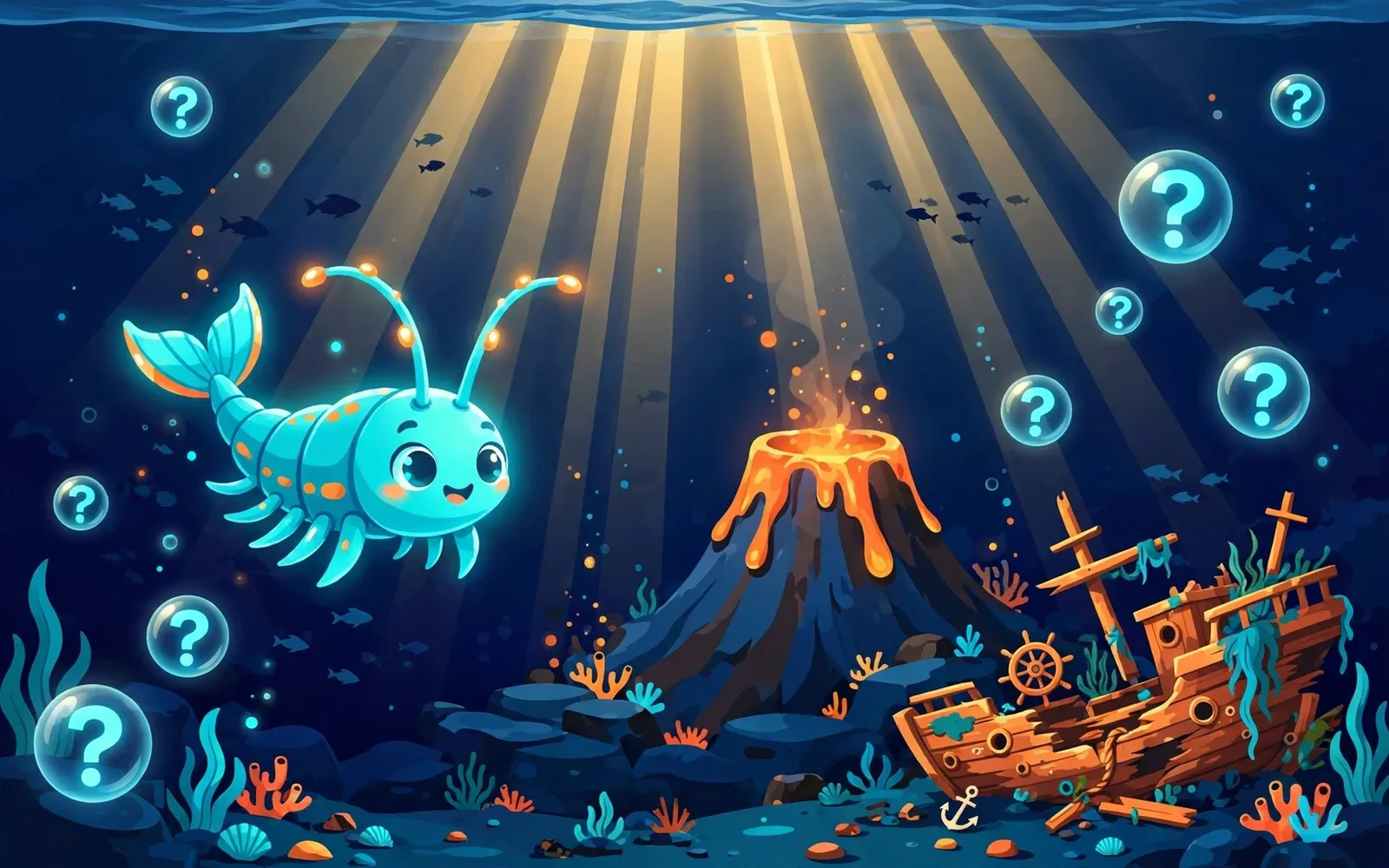
Krillion is a free daily browser trivia game in which players answer seven prompts in 25 seconds each, and the rarer a correct answer is, the deeper their krill dives; its mix of competition, routine and shareable scores has made it a classroom craze among Gen Z and Gen Alpha.
Krillion is a free daily trivia game that lives in the browser, and right now it is the thing your child is most likely to be playing at lunch. Every morning it serves up seven prompts — the same seven for everyone on the planet — and gives players 25 seconds to answer each one. The twist is that a correct answer is not enough. The game wants the rarest correct answer you can think of. Say "camera" when it asks for an object with a lens and you get 10 points. Say "endoscope" and you get 60. Land the single rarest answer in the world and you are, in the game's own words, one in a krillion.
That small twist has turned a website built by one anonymous 23-year-old into one of the fastest-growing games of the year. Its creator told Fast Company that Krillion now has six million daily active users, and that he is "immensely" surprised by its popularity. Searches for the game's name have jumped a hundred-fold in three months, according to a school newspaper that tracked the surge. Classrooms from California to Florida are full of it, teachers are blocking it, students are petitioning to unblock it, and dozens of copycat versions have already appeared in app stores. If Wordle was the daily game of the pandemic years, Krillion is shaping up to be the daily game of 2026 — and it is being played, above all, by Gen Z and Gen Alpha.
This is what Krillion actually is, how it works, why children are obsessed with it, what is happening in schools, and what parents should know before their child asks to play "just one more round".
What is Krillion and how do you play it?
Krillion is a browser game at krillion.io. There is nothing to download and no account to create, which is part of why it spread so fast through schools: a child can open it on a Chromebook, a phone or a library computer and be playing in seconds.
Each day brings seven prompts, identical for every player worldwide. The prompts are open-ended categories rather than questions with one right answer. On the day Fast Company's reporter played, they included "Name an animal that eats fish", "Name a movie that's at least two and a half hours long" and "Name an object that has a lens". Other days have asked for a country whose second letter is "o", a character from a Disney show, or something with a needle. The variety is the point: a student who struggles in physics might still know the most obscure country name in the room, and the game rewards that kind of scattered, magpie knowledge.
You type your answer and hit enter. You have 25 seconds per prompt, which is deliberately too short to Google anything. Get it wrong, or run out of time, and you score nothing for that prompt. Get it right and the game scores your answer for rarity. Your points become depth: every point sends your little krill — the shrimplike plankton the game is named after — 10 metres deeper into a pixelated ocean. Obvious answers sink you 100 metres. The rarest answers send you plunging 1,000 metres. With seven prompts, a perfect game takes you to 7,000 metres, past an underwater volcano and the ruins of the Titanic on the way down.
The whole round takes about two minutes. That brevity matters more than it sounds. A two-minute game fits into a lunch break, a bus ride, the gap between lessons — and, as teachers keep discovering, the gap between a teacher turning to the whiteboard and turning back.
The scoring system: from plankton to one in a krillion
Krillion's scoring is where the game stops being a trivia quiz and becomes a psychology experiment. Most trivia games reward knowing the answer. Krillion rewards knowing the answer nobody else thought of. That single change flips the usual classroom hierarchy upside down: the child with the widest general knowledge beats the child with the fastest recall, and the child who knows one gloriously obscure fact can beat them both.
The tiers, as students have mapped them, run like this. A "plankton" answer — the obvious one, the one everyone types — earns 10 points. A "schooler" earns 30. A "rare" answer earns 60. A "deep cut" earns 85. And the rarest correct answer of all, the one almost nobody else found, is a "one in a krillion" and earns 100 points. There is also a mischievous sixth category, the "too clever" answer, worth 15 points: the answer that is technically clever but too cute for its own good. Asked to name something with a needle, one student answered "haystack". The game noticed.
Most players finish somewhere around 290 points, according to student reporters who have been tracking scores. Breaking 400 is considered a big deal. The gap between 290 and 400 is the whole game: it is the distance between knowing the right answer and knowing the right answer that nobody else knows.
How does the game decide what counts as rare? The game's FAQ, quoted by Fast Company, says some prompts "can be scored entirely mechanically against a familiarity database of how often a word or name actually turns up in what people read and write", while others "can't be reduced to a number like that, and those get a combination of LLM assistance and a manual pass". In plain language: part of the scoring is a giant frequency table of how common words are, and part of it is an AI model plus a human checking the edge cases. That hybrid is also why the game can be gamed — more on the "James Method" below — and why its creator has a full-time job just keeping the scoring honest.
The gold flash matters too. Land a "one in a krillion" and the screen flashes gold, with haptic feedback on a phone. It is a tiny dopamine hit, engineered with the same care as a slot machine's chime, and students talk about it the way earlier generations talked about a hole-in-one. One student told her school paper she wished every question was about movies so she could finally get one. Another said he had "gotten plenty of One in a Krillions, including [his] first week playing". The scarcity is the reward.
Who made Krillion? The 23-year-old behind the krill
Krillion's origin story is almost as improbable as its rise. The game is run by a one-person team. Its creator goes by the pseudonym "kp" and describes himself as "a 23-year-old American CS grad". He told Fast Company by email that he is "a 23-year-old American guy who recently graduated with a CS degree, and former software engineer", and that he is keeping his full identity anonymous for now.
The domain was registered on 18 July 2026. The site's earliest Internet Archive capture is from 3 August. So the game is barely four months old. In that time it has gone from a side project to a game its creator says reaches six million people a day — a figure he himself calls his "best-case scenario 10x over". Fast Company, which broke the story to a mainstream audience on 24 November 2026, concluded that Krillion "seems all but certain to close out 2026 as the year's most viral" game.
The idea came from two places, and the combination tells you a lot about how internet culture works now. The game mechanic was inspired by the BBC quiz show Pointless — specifically by TikToks that posted slideshows of Pointless rounds. "The game mechanic was inspired by Pointless, particularly TikToks that posted slideshows of Pointless," kp told Fast Company. "Unlike Pointless, which used survey data, it would be similar to Krillion, where it would be like 'name a country with the letter A' and each country had a set rarity. I always really enjoyed those TikToks."
Pointless, for parents who have never watched it, is a British quiz show that has run on the BBC since 2009, hosted by Alexander Armstrong with Richard Osman. Before each show, 100 people are given 100 seconds to answer general-knowledge questions. Contestants then try to give a correct answer that as few of those 100 people gave as possible; an answer nobody gave is a "pointless" answer and scores zero — the best possible score. The format has pulled peak audiences of more than seven million viewers, and its genius is the same as Krillion's: it makes obscurity, not knowledge, the skill that wins.
The visual identity came from somewhere else entirely. "The visual identity was inspired by an internet meme that was popular a while back where people would say they are 'one in a krillion,'" kp said. "The idea to mash these two together was something that kind of just happened." A television format from 2009, a meme, and a solo developer with a summer to spare: that is the whole recipe. It is worth remembering the next time someone tells you a viral hit needs a studio, a budget or a marketing department.
Why Gen Z and Gen Alpha are obsessed with it
Krillion did not go viral because it is a good trivia game. Plenty of good trivia games exist. It went viral because it presses four buttons that this generation is exquisitely sensitive to, all at once.
The first is the niche epidemic. Being normal is the one thing nobody wants to be. In a culture where a teenager's playlist, wardrobe and opinions are all performances of taste, a game that literally scores you on how different your answers are from everyone else's is catnip. "The reason it's probably so popular is the fact that everyone has the desire to be more niche than other people," Tadgh Casey, a sophomore at Carlmont High School in California, told his school newspaper, Scot Scoop. "Everyone wants to be more individual than other people. You can get a score on how much more unique you are compared to other people." A student paper in Michigan put it the same way: the fun is "the sense that a player has discovered something exceptionally rare, fueled by the so-called 'niche epidemic,' where young people engage in pursuits simply for the sake of being unique".
The second is the daily ritual. Krillion's seven prompts last 24 hours and then they are gone. That creates the same fear of missing out that made Wordle a morning habit for millions: if your friends message to say they landed two "one in a krillion" answers today, you hurry to play before the prompts change. "Daily games have been a thing ever since COVID, and everyone has their daily game," Casey said. Selina Fang, another Carlmont sophomore, described the pull in plainer terms: "It feels like creating a routine. I like daily things, like daily puzzles, because it helps me be more consistent. Usually I'm not that consistent, but if I can do this puzzle every day, it's consistent." For a generation whose days are fragmented across apps and notifications, a two-minute ritual that is the same every morning is genuinely anchoring.
The third is that it is shareable without being spoiling. Like Wordle's green-and-yellow grid, a Krillion score can be posted without giving away the answers. Friends compare depths, not words. That makes it a social game that never actually requires playing together — perfect for group chats, and perfect for the school corridor, where the conversation is less "what did you get?" than "how deep did you go?"
The fourth is that it flatters a different kind of cleverness. School rewards the child who knows the answer the teacher wants. Krillion rewards the child who knows the answer nobody else wants, or nobody else has. The student who can name an obscure deep-sea fish, a forgotten 1970s film or a country most people could not find on a map suddenly has a leaderboard that values exactly what school usually ignores. That is a powerful feeling for a twelve-year-old, and it is why the game's fans talk about it with an affection that trivia apps almost never inspire.
Krillion in the classroom: blocked, unblocked, and played at lunch
Krillion's real stronghold is the school. The evidence is not in app-store charts — there is no app to chart — but in school newspapers, which have been chronicling the takeover with the breathless enthusiasm of war correspondents. Carlmont High School's Scot Scoop reported on 14 November 2026 that the game "has grown rapidly in popularity and is regularly played in classrooms". Detroit Catholic Central's Blue & White reported on 20 November that Krillion "is building a presence in the school too, with students, teachers and staff enjoying the game before, after, and even during the school day". A student paper in Florida, the Seminole Newspaper, wrote that "every morning, over a million people take on seven prompts", and that at Seminole High School daily word games "have become the center of attention between breaks, at lunch, and even during the middle of class".
Teachers are caught in the middle, and their reactions split in an interesting way. Some have embraced it. At Detroit Catholic Central, a teacher identified as Mrs Murphy bought the game's paid Krillion Unlimited mode so she and her students could play as many rounds as they liked beyond the seven daily prompts. Students there have petitioned for the game to be unblocked on the school network. Gavin Huiskens, a freshman, told the paper he "plays Krillion every single day after school, and it should be unblocked because it's educational and expands knowledge". Two sophomores agreed the school "shouldn't crack down on an 'at least semi-intellectual game that only takes two minutes to play'".
Other teachers see the other side of the same coin. Michael O'Neall, who teaches chemistry and AP environmental science at Carlmont, told Scot Scoop that classroom gaming is a constant background hum: "I have some students now that are starting to play Minecraft somehow in class. We see things like Cookie Clicker, a lot of the racing games, and Cool Math Games." Jeffrey Tanguay, who teaches life skills and ethnic studies, uses Lightspeed, classroom monitoring software that lets teachers see every student's screen at once, pause the internet, block websites and close tabs. "Basically, if we want to be lazy and feel all powerful as teachers, it lets us see everyone's screen all at once," he said. "It's not an everyday thing, but at least once or twice a week, I'll catch some of the same boys. I had to email one of his parents." His rule is simple and hard to argue with: "I play video games myself in my free time, but that's when I'm at home on my couch. So I try to remind students, you're not at home on your couch in your room."
The classroom tension is not really about Krillion. It is about a device in every pocket and a game that takes two minutes, which is short enough to feel harmless and long enough to derail a lesson. That tension is the same one behind the school phone bans spreading across the United States — Los Angeles alone has spent more than $6 million on its ban, a story we covered in our report on LAUSD's $6 million phone ban and what 160,000 students say about it. Krillion is not the cause of that tension. It is the latest, most charming symptom of it, and the fact that students themselves describe it as educational is exactly what makes it hard for schools to draw a clean line.
There is a softer side to the classroom story too. Talia Weinberger, a Carlmont sophomore, plays Krillion during lunch "to recharge for her afternoon classes". "We all have so much homework, and the world is in such a weird place that these games can make everyone's day just a little better," she said. Teachers at Seminole High have noticed the same thing from the other direction: they have "learned to appreciate the student's knack for trivia/word games as a distraction from doom scrolling", because the students are "actively flexing their vocabulary, quick thinking, and general knowledge". A two-minute game that replaces ten minutes of doomscrolling is, by the standards of the modern school day, a bargain.
Cheats, clones and the James Method
Any game that becomes this popular this fast attracts two things: people trying to cheat at it, and people trying to copy it. Krillion has both, and both are worth parents knowing about.
The cheat has a name: the James Method. It was documented by The Headlight, the student paper at Ida B. Wells High School, which reported that "methods have aroused on social media, one known as the 'James Method'. The idea is that if you get a prompt like, 'Name a character from a Disney show', you can say James, or other names like that and it often autocorrects to a deep cut or better." The trick exploits the way the game scores uncommon names: a name like James, attached to a minor character, reads as rare to the scoring system even though the player did almost no thinking. "The James Method is really smart, but using it makes you a cheater," one sophomore told the paper. The fact that students are debating the ethics of it — rather than just using it quietly — says something decent about the game's community. It also says something about the scoring: any system that mixes a frequency database with an AI model will have seams, and teenagers are the best seam-finders on earth.
The clones are a bigger problem. Fast Company noted "numerous Krillion knockoffs on the web and in the Google Play Store", and the original is only at krillion.io. Some of those copies are harmless imitations. Others are the usual app-store grift: lookalike games stuffed with ads, in-app purchases, and permissions a trivia game has no business asking for. This is the part parents should actually check. If your child has "Krillion" on their phone as an app, it is not the real Krillion — the real one is a website, and it is free. The same warning applies to any game your child finds through an app store: our guide on checking before your kid buys anything in a game covers the in-app purchase traps that clone games rely on.
The game itself has also started to monetise, in a much gentler way: Krillion Unlimited, the paid mode that lets players go beyond the seven daily prompts, is the version a teacher bought for her class. A paid mode is not a problem in itself, but it is the first step on the road every viral game walks — from free daily ritual to subscription product — and it is worth watching how far down that road kp decides to go.
Krillion vs Wordle: the daily game lineage
Krillion did not come from nowhere. It is the latest branch of a family tree that starts with the crossword, runs through Wordle, and now includes a whole ecosystem of once-a-day games. Understanding that lineage helps explain both why Krillion exploded and why it might last.
Wordle is the obvious ancestor. Josh Wardle built it in 2021 as a private game for his partner, released it publicly in October 2021, and watched it go from 90 players in November to more than 300,000 by January 2022 and millions within weeks. The New York Times bought it on 31 January 2022 for a price described only as "in the low seven figures". Five years on it still draws millions of daily players, and the Times' games division as a whole logged 11.2 billion plays in 2025, according to a data-driven history of the daily puzzle boom published by David Carr. Wordle's genius was its constraint: one word a day, the same for everyone, no archive to binge. Krillion copies that constraint exactly and then adds a second one: not just one puzzle a day, but one puzzle a day that you cannot brute-force with knowledge alone.
The daily-game shelf has grown crowded since Wordle. The New York Times now bundles Connections, Strands, Spelling Bee and the Mini alongside it — the Times did not invent daily word games, but it combined them into a single destination, as The Geek Insights' history of daily word games describes. Duolingo, which is a daily game wearing a language app's clothes, reported 64.9 million daily users in the third quarter of 2026. Chess.com's daily puzzle draws more than a million players a day. LinkedIn, of all places, now runs daily games for "millions" of players. As Carr's data shows, most daily games never publish a player count at all — which makes kp's claim of six million daily users for Krillion striking, if it holds up, and also worth treating with the caution any self-reported number deserves.
What Krillion adds to the lineage is competition without confrontation. Wordle is solitary; you compare a grid. Connections is solitary; you compare a score. Krillion is solitary too, but its score is a ranking against the entire world, refreshed daily, and its best answers are inherently social — you want to tell someone about the time you answered "vinegar pie" and watched your krill plummet 850 metres. That story, told at lunch by a Seminole High student with three seconds left on the clock, is the game's marketing department. It costs nothing, and it works better than any advert.
Is Krillion good for kids? The honest answer
Parents asking whether Krillion is "good" for their child will get a more encouraging answer than they get for most viral games, but it is not an unqualified yes. Here is the honest version.
On the plus side, the game genuinely exercises vocabulary, general knowledge and quick recall under time pressure. It rewards breadth over depth: the child who knows a little about a lot — animals, films, geography, science — does better than the child who knows a lot about one thing. It rewards lateral thinking, because the winning answer is often the second or third thing you think of, not the first. And it is short. A two-minute daily game is a fundamentally different proposition from an endless feed or a game designed to keep a child playing for hours. The students petitioning to have it unblocked are not wrong when they call it educational; it is, at minimum, more intellectually demanding than the average thing competing for their attention.
On the minus side, it is still a screen, still a streak, and still a daily obligation engineered to bring a child back tomorrow. The 25-second timer is a stressor by design, and some children will feel that pressure more than others. The scoring system teaches a subtle lesson that deserves a conversation: that being unusual is valuable in itself, which is true in a trivia game and complicated everywhere else. And the classroom problem is real. A game that takes two minutes is a game that can be played twice in a lesson, and the teachers catching students once or twice a week are catching the visible tip of something larger.
None of that makes Krillion dangerous. It makes it ordinary — a piece of culture that children love, that has real upsides and real friction, and that is better understood than banned. The comparison that helps most is with the games that came before it. Nobody seriously argues that Wordle damaged a generation. The risk with Krillion is not the game itself; it is the ecosystem around it — the clones, the paid modes, the cheating shortcuts, and the habit of reaching for a phone every spare minute. Those are the things a parent can actually influence.
What parents should do
You do not need a policy document for Krillion. You need about ten minutes and a bit of curiosity. Here is the practical version.
Play it with them. Once. The fastest way to understand any game your child loves is to sit next to them while they play it, and Krillion is unusually well suited to that: seven prompts, two minutes, and a score you can compare. You will learn more about your child's general knowledge in one round than in a term of homework arguments, and they will enjoy beating you. If they beat you with an answer you have never heard of, that is the game working as intended.
Check where they are playing it. The real Krillion is a free website at krillion.io. If your child has downloaded a Krillion app, or paid for anything inside a game with a similar name, that is a clone, and it should be deleted. The same check applies to any game that arrives through an app store rather than a link you recognise.
Talk about the cheating, not just the playing. The James Method is a good opening: ask your child whether using it counts as cheating, and why. Teenagers have surprisingly firm views on fairness in games, and the conversation is more useful than any lecture, because it is about their ethics, not your rules. It is also a natural way into the bigger question of how AI scoring works — the game itself uses a mix of a frequency database and an AI model to judge answers, which is a genuinely interesting thing for a child to understand about the technology shaping their world.
Set the same boundary you would for any daily game. Two minutes a day is fine. Two minutes a day plus the YouTube videos about it, plus the subreddit, plus the arguments about whether it should be unblocked at school, is a hobby. That is also fine — but it should be a conscious choice, not a habit that assembled itself while nobody was looking. If your child's school has blocked it, treat that as the school's call, not a challenge to route around. The teachers dealing with it are not the enemy; they are the people trying to teach your child while a krill swims across their screen.
And keep it in proportion. Krillion is a trivia game, not a social network, not an AI companion, and not a slot machine. It does not message your child, it does not ask for their data, and it does not keep them up at night. Compared with the things competing for your child's attention in 2026 — the AI chatbots that 72% of teens have tried, the feeds that never end, the games built to be unputdownable — a two-minute daily puzzle about obscure animals is close to the best-case scenario. That is worth saying out loud, because children can tell when adults treat everything new as a threat, and they stop listening.
Krillion FAQ: the questions parents actually ask
What is Krillion? Krillion is a free daily browser trivia game at krillion.io. Each day it gives every player the same seven open-ended prompts, 25 seconds each, and scores answers by rarity: the more obscure a correct answer is, the more points it earns and the deeper the player's krill dives.
Is Krillion free? The daily game is free on the web. A paid mode called Krillion Unlimited lets players play extra rounds beyond the seven daily prompts. There is no official Krillion app; apps using the name are clones.
How many people play Krillion? The game's creator, a 23-year-old who goes by "kp", told Fast Company the game has six million daily active users. That is his own figure and has not been independently verified, but searches for "Krillion" have risen a hundred-fold in three months, and school newspapers across the US report it is being played daily in classrooms.
Is Krillion safe for kids? The game itself asks for no account, no personal information and no chat with strangers, which makes it far safer than most viral games. The risks are the usual ones: clone apps with ads and purchases, too much screen time, and playing during lessons. The real Krillion is a website, not an app.
Why is Krillion so popular in schools? It takes two minutes, it is free, it runs on school Chromebooks, and it rewards the kind of scattered general knowledge that students love showing off. Teachers are split: some have bought the Unlimited mode for their classes, while others catch students playing it during lessons and block it on the school network.
What is the James Method? A shortcut some players use: answering prompts with uncommon names like "James", which the game's scoring system often rates as rare. Students themselves argue about whether it counts as cheating, and it is a good conversation starter about fairness and how AI scoring works.
Will Krillion last, or is it a fad? Nobody knows. Wordle is still going five years after its viral moment, and daily games have a habit of becoming rituals rather than fads. Krillion's creator says he has "a lot of ideas, whether it's new features for Krillion, or new games". The safer bet is that the daily-game habit lasts even if this particular game fades — which is why the conversation about it matters more than the game itself.
The bottom line
Krillion is the rarest kind of viral hit: one that a parent can look at without flinching. A solo developer built a two-minute game that rewards obscure knowledge, and six million people a day — many of them schoolchildren — decided it was worth their morning. It has already spawned clones, cheating methods and classroom bans, which is what happens to anything children love. It has also done something genuinely unusual: made general knowledge feel like a superpower, and made being the only person in the room who knows something feel like winning.
Your child will probably ask you to play it. Say yes. You will lose, and the answer you lose to will be gloriously obscure. That is the point — and, for once, it is a point worth celebrating.
For more on how Gen Alpha's tastes are reshaping the world around them, read our report on Gen Alpha preferring real shops to screens, and for the wider story of how viral trends reach your child's phone, our guide to the Roblox meme taking over TikTok. And if your child is spending time with AI tools for schoolwork, our daily study on 70% of teens now using AI for schoolwork is the context that pairs with it.