Cozy gaming: why calm games are winning over kids
Cozy games like Stardew Valley and Animal Crossing are winning over kids with gentle play, no pressure to win, and space to create and relax at their own pace.
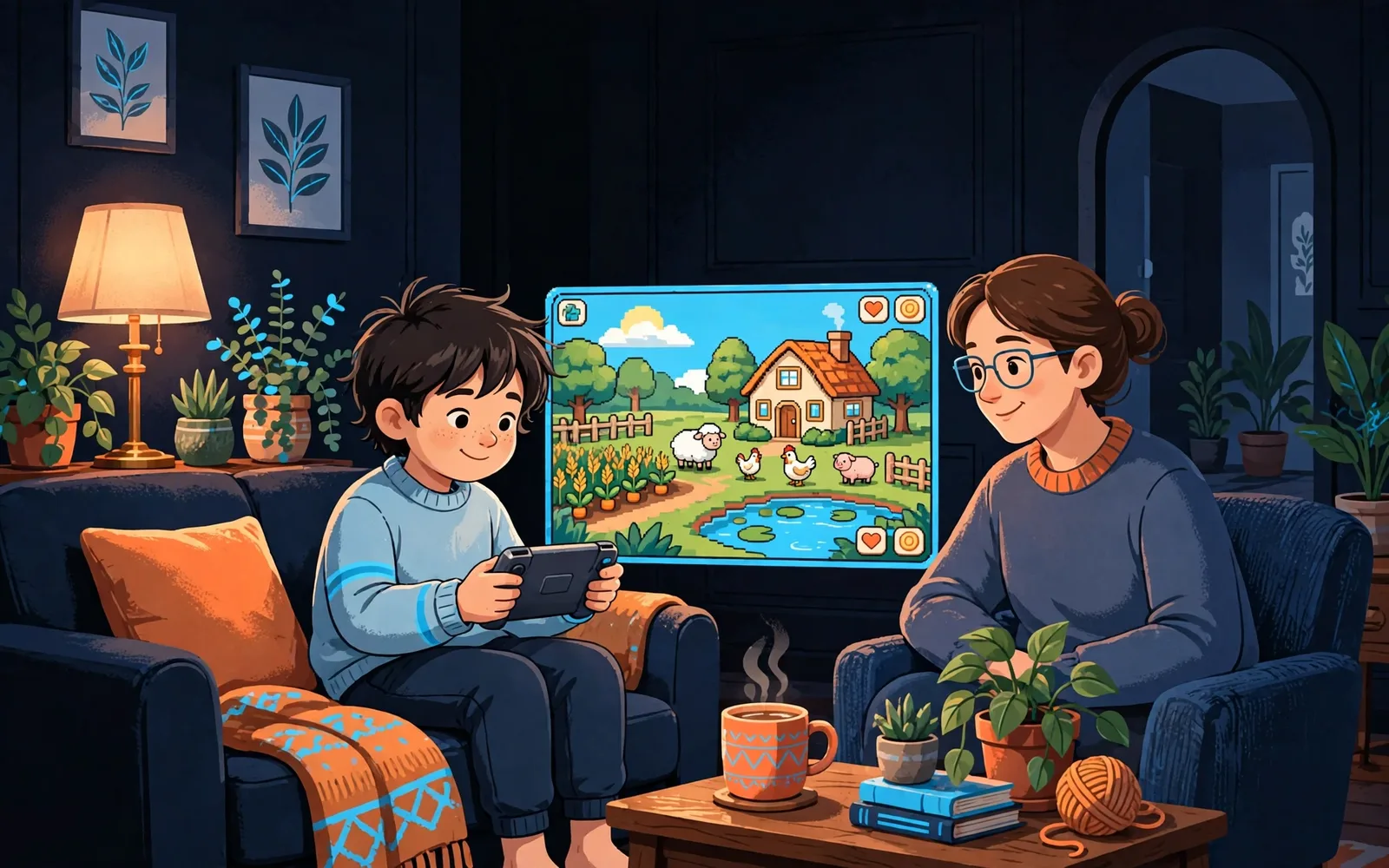
Cozy games are winning over kids because they replace pressure with calm: gentle goals like farming and decorating, no timers or rankings, and the freedom to create and relax at their own pace.
If you have watched a child play a video game lately, you may have noticed something surprising. Not every game is loud, fast, and full of shouting. A growing number of kids are choosing calm games instead. In these games, there is no timer counting down, no enemy chasing them, and no leaderboard telling them they lost. Instead, they plant crops, decorate a little island, cook a simple meal, or just walk around a quiet village and talk to friendly characters. This style of play is called cozy gaming, and it is quickly becoming a favorite way for kids to spend their screen time.
So why are calm games winning over kids? The short answer is that they give children something many other games do not: control, creativity, and a break from pressure. A cozy game lets a child set their own pace. If they want to spend the whole session arranging flowers or fishing by a lake, the game does not punish them. If they make a mistake, nothing bad happens.
What makes a game "cozy"?
A cozy game is built around comfort, creativity, and calm. The goals are soft and open-ended: players might grow a garden, build a house, collect items, cook, craft, or explore a peaceful world. There is usually no way to "lose" in the traditional sense, and rarely a clock forcing quick decisions.
Two of the best-known examples show what this looks like. In Stardew Valley, players run a small farm, growing crops, raising animals, and getting to know the people in a nearby town. In Animal Crossing, players shape their own island, decorating homes, planting trees, and visiting animal neighbors. As one guide to cozy games puts it, these titles are built for comfort, creativity, and calm, with a gentle pace that lets players enjoy the world rather than race through it (The Cozy Gaming Nook).
Why kids are drawn to calm play
Kids do not always want to compete. Sometimes they want to make something, explore a world, or simply relax. Cozy games hand them the tools to do that. A child can design a bedroom exactly how they like it, plant a garden and watch it grow, or build a little town one piece at a time. That sense of ownership is powerful: the world in the game responds to their choices, but it never judges them.
There is also a softer social side: many cozy games let children visit a friend's island or share what they have built, without voice chat with strangers or ranked matches. For shy kids, or kids who find competitive games stressful, that difference is huge.
Relaxation is a real reason people play games at all. According to the Entertainment Software Association's 2025 Essential Facts report, 68% of players say they play to pass the time or relax, and 81% of adults believe games provide stress relief (ESA 2025 Essential Facts). A newer ESA report puts the scale of play in perspective too: 212.3 million Americans play video games weekly, and 78% of adults say games provide stress relief (ESA 2026 report). When a game feels relaxing instead of stressful, children are more likely to enjoy it and less likely to come away frustrated.
The ESA has also highlighted the connection between games and wellbeing more broadly, noting that play can support relaxation and social connection when it is balanced and age-appropriate (ESA Power of Play: Video Games and Wellbeing).
Cozy games vs fast competitive games
Not all games are the same, and it helps to see the difference side by side.
| Feature | Cozy games | Fast competitive games |
|---|---|---|
| Pace | Slow and self-paced; no timer pressure | Fast; matches, timers, and quick reactions |
| Pressure | Low; no losing, no ranking, mistakes are fine | High; rankings, win/loss results, and peer comparison |
| Chat and voice | Usually none or limited to known friends; mostly solo or gentle co-play | Often open voice or text chat with strangers |
| In-app spending | Usually a one-time purchase; little or no pressure to buy | Often built around skins, passes, and frequent purchase prompts |
| Parent check | Easy to watch: calm content, clear goals, simple to pause | Harder to monitor: live matches, chat, and spending prompts |
This does not mean competitive games are always bad. Many kids enjoy them, and they can teach teamwork and quick thinking. But the table shows why cozy games can be an easier starting point, especially for younger players or for families who want calmer screen time.
What parents should look for
Even a calm game deserves a quick parent check before it becomes a regular habit. Start by playing a few minutes together, or at least watching your child play. Look at what the game asks the player to do, whether there is any chat with strangers, and whether it pushes extra purchases. A truly cozy game should feel easy to pause. Check the age rating on the box or store page too, since some games that look cozy may still include online chat or surprise purchase prompts.
It also helps to set the rules together. The American Academy of Pediatrics recommends that families create a family media plan that sets limits, screen-free zones, and time for co-play, so screen time fits around sleep, school, homework, and family time rather than crowding them out (AAP Family Media Use Plan). A simple version works well: agree on when gaming happens, for how long, and where.
For younger children, the guidance is stricter. The AAP advises avoiding media use for children under 18 months except for video chatting, and limiting children aged 2 to 5 years to about 1 hour per day of high-quality programming, watched with a parent when possible (AAP guidance on young children and media). The World Health Organization similarly recommends that 3- to 4-year-olds get no more than 1 hour of sedentary screen time per day, and that less is better (WHO guideline on physical activity, sedentary behaviour and sleep for children under 5).
How to make cozy gaming work at home
A few small habits can turn cozy gaming into a genuinely positive part of your child's week. First, treat it like any other hobby: it has a time and a place, and it ends when the agreed time is up. Because cozy games are easy to pause, ending a session is usually much calmer than ending a competitive match mid-game.
Second, let your child show you what they built. Ask about their farm, their island, or their favorite character. Kids love explaining their creations, and those conversations turn screen time into connection time.
Third, balance it with the rest of life. Cozy games are at their best when they sit alongside outdoor play, reading, hobbies, and time with friends and family. If gaming starts to crowd out sleep, schoolwork, or outdoor time, that is a sign to tighten the plan.
The bottom line
Cozy gaming is winning over kids because it respects how they want to play. It offers creativity without competition, progress without pressure, and a world that feels safe to explore. The numbers back up the idea that relaxation is a major reason people play: most players say they game to relax, and most adults see games as a source of stress relief. For parents, cozy games also offer something practical: content that is easier to understand, easier to pause, and easier to enjoy together. When families choose games thoughtfully, set clear rules, and play together sometimes, calm games can be a healthy, happy part of childhood. In a gaming world that often shouts, the quiet games are finally getting heard.
FAQs
What is cozy gaming?
Cozy gaming is a style of play built around comfort, creativity, and calm, with gentle goals like farming, decorating, cooking, or exploring, and no pressure to win or beat a timer.
Are cozy games good for kids?
They can be a gentler choice because they are low-pressure, easy to pause, and usually free of stranger chat and aggressive purchase prompts, but parents should still check age ratings and set time limits.
What are some popular cozy games for kids?
Stardew Valley and Animal Crossing are well-known examples, with farming, fishing, island decorating, and a gentle pace that lets children play and create at their own speed.
How much screen time is okay for young children?
The AAP advises no media except video chat under 18 months and about 1 hour per day of high-quality programming for ages 2 to 5, while the WHO recommends no more than 1 hour of sedentary screen time for 3- to 4-year-olds.
How can parents manage cozy gaming at home?
Create a family media plan with agreed play times, screen-free zones, and regular co-play, and use the easy pause-and-save nature of cozy games to end sessions calmly.