Tween Skincare: What Dermatologists Say Is Safe
Dermatologists say most tweens need only a gentle cleanser, moisturizer, and SPF 30 sunscreen — here is what is safe, what to skip, and how to talk about it.
Drafted with an AI writing assistant and checked against its sources by the editor before publishing. How we use AI.
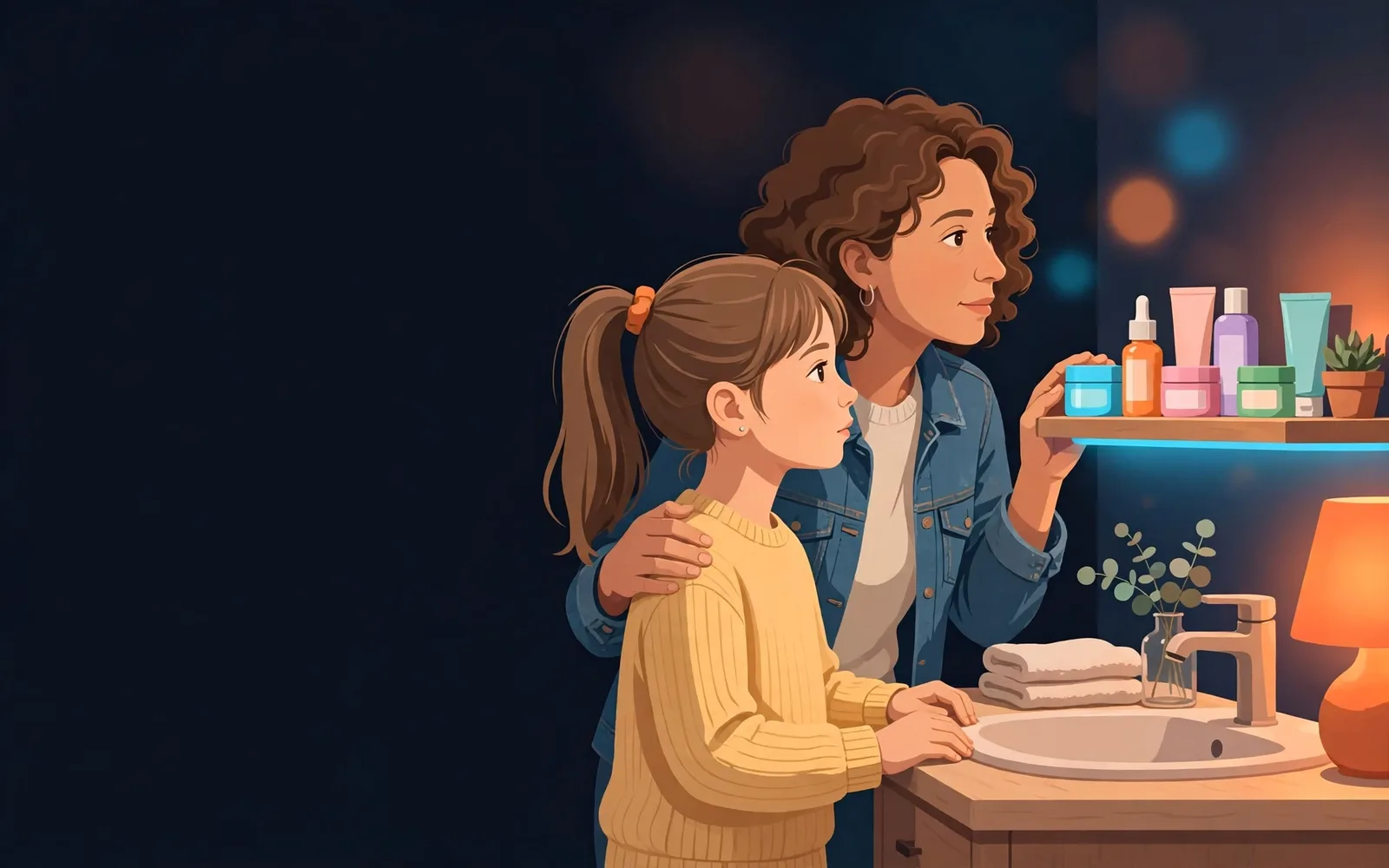
Most tweens need only three products — a gentle fragrance-free cleanser, a simple moisturizer, and broad-spectrum SPF 30 sunscreen — and should avoid retinol, strong acids, and anti-aging products unless a dermatologist says otherwise.
Walk into any beauty store on a Saturday and you will see it: girls who look about nine or ten, baskets full of serums and anti-aging creams, filming themselves for TikTok. It is the trend the internet calls "Sephora kids," and it has parents asking: is any of this safe for my child?
The short answer is that most of it is not needed, and some of it can genuinely hurt young skin. The fix is simple: dermatologists agree on what tweens actually need, and it fits in three small steps.
Why tweens suddenly want adult skincare
The trend started on phones, not in stores. Beauty influencers, many of them tweens and teens themselves, post multi-step "get ready with me" routines that make a ten-product shelf look normal. When a child watches those videos every day, wanting the same products feels like wanting the same shoes everyone else wears.
That matters because the products being copied were designed for adult skin. Anti-aging serums, strong exfoliating acids, and retinol creams are made to fix wrinkles, sun damage, and uneven tone, none of which are problems a ten-year-old has. Children have more collagen and a skin barrier that is still developing, so adult products can irritate skin that was perfectly healthy (A Healthier Michigan).
Much of what children see online is also sponsored. Teaching kids to spot sponsored content and influencer ads is part of the same conversation, and our guide to spotting sponsored content and influencer ads explains how to have it. The "get ready with me" videos your child watches are covered in our guide to get ready with me videos parents should know.
What the research actually found
In 2025, researchers at Northwestern University published the first peer-reviewed study of the skincare routines children post on TikTok, in the journal Pediatrics. The team created TikTok accounts reporting the user as 13 years old, then analyzed 100 skincare videos from creators aged 7 to 18. Each routine featured an average of 6 products and cost an average of $168. The 25 most-viewed videos contained an average of 11 potentially irritating active ingredients, with a maximum of 21. Only 26.2% of the videos included sunscreen at all (Pediatrics study on PubMed).
The study concluded these routines offer little to no benefit for the children they target, while carrying a real risk of irritation, allergic contact dermatitis, and sun sensitivity (Pediatric Skin Care Regimens on TikTok).
A review in the Journal of Drugs in Dermatology found that retinol, exfoliating acids, and vitamin C have not been thoroughly tested in children, and using them without medical supervision can cause redness, irritation, sun sensitivity, and dermatitis (Journal of Drugs in Dermatology review).
The trend is also starting young: some children begin these routines as young as eight, driven by skincare content from beauty influencers (Humanium).
Why young skin reacts differently
Children's skin is not just a smaller version of adult skin. It is thinner, more permeable, and more sensitive, so it absorbs ingredients more easily and gets irritated more easily. The skin barrier, the layer that keeps moisture in and irritants out, is still developing through the tween years.
That is why a product an adult uses every night can leave a ten-year-old with a red, peeling, itchy face. Dermatologists report seeing tweens with irritant dermatitis caused by high concentrations of active ingredients, such as retinol or alpha hydroxy acids, that they did not know how to use. Layering several actives multiplies the risk, because the same irritating ingredient often appears in three or four products in one routine.
There is also a longer-term worry: repeated exposure to strong actives can trigger allergic contact dermatitis, a skin allergy that can last for life.
Ingredients to skip, and what to use instead
Board-certified dermatologist Dr. Marisa Garshick recommends that tweens and teens avoid products containing retinol, vitamin C, and exfoliating acids, because those ingredients target wrinkles and sun damage that children's skin simply does not have (PR Newswire dermatologist guide).
The safe list is short. A gentle, fragrance-free cleanser, a simple moisturizer if skin is dry, and a broad-spectrum sunscreen with SPF 30 or higher cover what most tweens need. The American Academy of Pediatrics recommends exactly this three-step routine, with a mineral sunscreen containing zinc oxide or titanium dioxide (AAP HealthyChildren).
| Viral TikTok routine | Dermatologist routine | |
|---|---|---|
| Products | About 6, often more | 3 |
| Average cost | About $168 per routine | A fraction of that |
| Active ingredients | About 11 potentially irritating actives in the most-viewed videos | None, unless a doctor prescribes one |
| Sunscreen | Included in only 26.2% of videos studied | Every morning, SPF 30 or higher |
| Goal | Anti-aging and "glass skin" | Protect and preserve healthy skin |
| Risk | Irritation, dermatitis, sun sensitivity, lifelong allergy | Very low when products are gentle and fragrance-free |
If your tween has acne, the answer is still not a ten-step routine. A gentle foaming cleanser twice a day and a light, oil-free moisturizer are the starting point, and a pediatrician or dermatologist can add one targeted treatment if needed. That is a medical decision, not a shopping decision.
How to talk to your tween about it
Banning every product usually backfires. Skincare feels like independence to a tween, and a flat "no" can make the products more attractive. Give them a routine of their own, one that is safe, and let them own it.
Start by letting them pick their own gentle cleanser and moisturizer, in scents and packaging they like. Then explain the rule in plain language: products that promise to fight aging, brighten, tighten, or exfoliate are made for adult skin. Children and teens should avoid any product that promises brightening, exfoliating, tightening, wrinkle-reducing, or anti-aging, according to guidance from the Mayo Clinic cited in dermatology advice for families (A Healthier Michigan).
It also helps to show them how the videos work. Many routines are filmed with filters and ring lights, and many products are paid promotions. Dermatologists recommend a gentle cleanser once or twice a day, a simple fragrance-free moisturizer if needed, and broad-spectrum SPF 30 or higher every morning, and nothing more for most children under 13 (Live That Glow tween skincare guide).
Set a shopping rule together: no product comes home unless you have both read the ingredient list, and anything with retinol, retinoids, glycolic acid, or "anti-aging" on the label stays on the shelf.
When to see a dermatologist
Most tween skin needs nothing more than the three-step routine. But book an appointment if breakouts do not improve after a few weeks of gentle care, or if there is lasting redness, peeling, itching, or a rash after using a product. A pediatric dermatologist can tell normal puberty changes from a reaction to a product, and can prescribe a treatment dosed for a child's skin. Bring the products your child uses to the appointment so the dermatologist can check the ingredient lists.
The bottom line
The "Sephora kids" trend is real, and the products at its center are mostly wrong for the skin they are used on. But the answer is not a lecture. It is a short, safe routine, a shopping rule you agree on together, and an honest conversation about what social media is selling.
Frequently asked questions
Is retinol safe for tweens?
No, not unless a doctor prescribes it for a specific problem such as acne. Retinol is too strong for most young skin and can cause dryness, irritation, peeling, and sun sensitivity.
What skincare does a 10-year-old actually need?
A gentle, fragrance-free cleanser, a simple moisturizer if their skin feels dry, and a broad-spectrum sunscreen with SPF 30 or higher every morning. That is what the American Academy of Pediatrics and the American Academy of Dermatology both recommend for most children.
Can my tween use vitamin C serums or exfoliating acids?
Dermatologists advise against them for tweens. High-strength vitamin C and exfoliating acids such as glycolic acid can disrupt the developing skin barrier and cause redness and peeling. If a tween has acne, a doctor may recommend one targeted treatment, but it should not come from a viral routine.
How do I stop my child buying adult skincare?
Do not just ban it. Give them a safe routine of their own, let them choose the products, and set a shared rule that nothing comes home without reading the ingredient list together. Explain that the videos are often filtered or sponsored, so the skin on screen is not a realistic goal.
When should I take my tween to a dermatologist?
Book an appointment if breakouts do not improve after a few weeks of gentle care, or if there is lasting redness, peeling, itching, or a rash after using a product. Bring the products to the appointment so the dermatologist can check the ingredient lists.