How much sleep does a 14 year old need?
A 14-year-old needs 8 to 10 hours of sleep nightly, say the CDC and the American Academy of Pediatrics. Yet most teens fall short, and it shows at school.
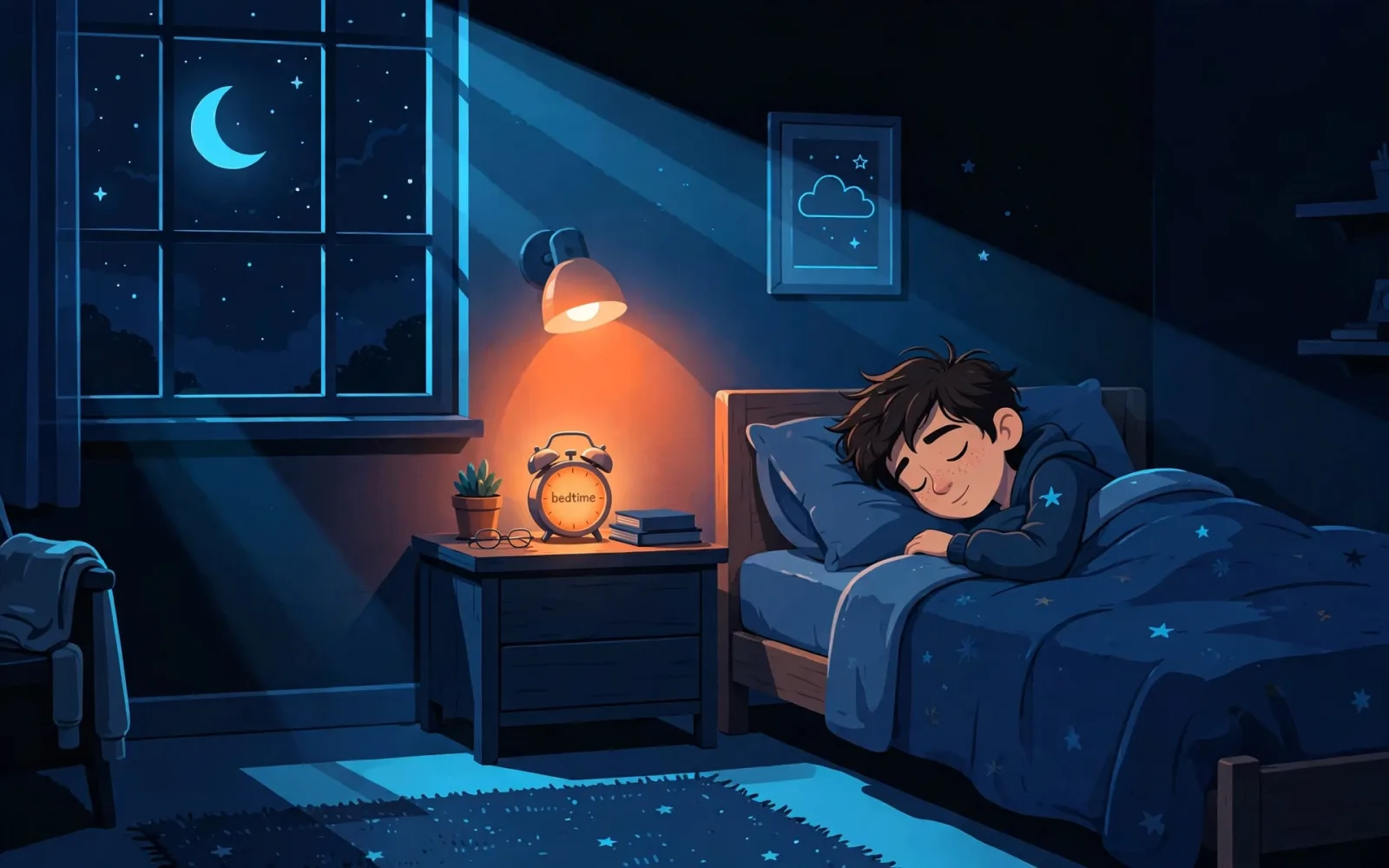
A 14-year-old needs 8 to 10 hours of sleep per night, according to the CDC and the sleep guidelines endorsed by the American Academy of Pediatrics. But a CDC analysis found about 7 in 10 U.S. high school students do not get enough sleep on school nights.
A 14-year-old needs 8 to 10 hours of sleep every night. That is the official recommendation from the U.S. Centers for Disease Control and Prevention (CDC) and the sleep guidelines endorsed by the American Academy of Pediatrics (AAP).
Yet most teens do not come close. If your 14-year-old drags themselves out of bed every morning, they are not alone, and it is not just laziness.
What is the official sleep recommendation for a 14-year-old?
Teenagers aged 13 to 18 should regularly sleep 8 to 10 hours per 24 hours, according to the American Academy of Sleep Medicine's 2016 consensus statement, which the AAP endorsed. A panel of 13 sleep experts reviewed and graded 864 scientific articles to write it (AASM). The CDC gives the same 8 to 10 hours for teens aged 13 to 17.
Eight hours is the floor, not the goal. Some 14-year-olds genuinely need closer to 10.
How much sleep do children need at each age?
Sleep needs shrink as kids grow. Here is the full picture from the CDC:
| Age | Recommended sleep per night |
|---|---|
| Newborns (0-3 months) | 14-17 hours |
| Infants (4-12 months) | 12-16 hours |
| Toddlers (1-2 years) | 11-14 hours |
| Preschoolers (3-5 years) | 10-13 hours |
| School age (6-12 years) | 9-12 hours |
| Teens (13-17 years) | 8-10 hours |
| Adults (18-60 years) | 7 or more hours |
Notice that teens still need more sleep than adults. A 14-year-old is not a small adult when it comes to rest.
How many teens actually get enough sleep?
Far too few. The CDC analyzed national survey data from 2015 and found that about 7 in 10 high school students (72.7%) did not get enough sleep on school nights, and 57.8% of middle school students in nine states (not a nationally representative sample) fell short too (CDC, 2018).
In other words, most teenagers are running on empty during the school week.
Why do teens stay up so late?
It is not only the phone. Puberty shifts a teen's internal clock later. The AAP's 2014 policy statement on school start times notes that adolescents' sleep-wake cycles can shift up to two hours later at the start of puberty, which is why a 14-year-old may honestly not feel sleepy until 11 p.m. or midnight.
Then the alarm goes off at 6 a.m. for school. Late biology plus an early school start equals too little sleep.
The AAP recognized this mismatch. In a 2014 policy statement, it called for middle and high schools to start no earlier than 8:30 a.m. But a CDC analysis of 2011-12 school data found the average U.S. start time was 8:03 a.m., and only 17.7% of schools started at 8:30 or later (CDC).
What happens when teens do not get enough sleep?
Short sleep is not harmless. The CDC lists higher risks of obesity, diabetes, injuries, poor mental health, and problems with attention and behavior among children and teens who miss sleep (CDC, 2018).
In the classroom it shows up as poor focus, worse grades, and a kid who looks lazy but is really just exhausted.
What time should a 14-year-old go to bed?
Work backward from wake-up time. To get 8 to 10 hours, bedtime depends on the alarm:
| Wake-up time | Bedtime for 8-10 hours of sleep |
|---|---|
| 6:00 a.m. | 8:00-10:00 p.m. |
| 6:30 a.m. | 8:30-10:30 p.m. |
| 7:00 a.m. | 9:00-11:00 p.m. |
Yes, 8:30 p.m. sounds early for a 14-year-old. That is the math, not a punishment. If school starts later, the bedtime can shift later too.
How can parents help a teen sleep better?
Small changes add up. The CDC advises parents to keep the same bedtime and wake time every day, including weekends, put all devices away at least one hour before bed, and store phones overnight outside the bedroom. Teens who keep screens in the bedroom sleep less and sleep worse (CDC).
Two more tips worth trying:
- Make the room cool, dark, and quiet. A comfortable sleep space makes falling asleep easier.
- Model good sleep habits yourself. Teens notice what parents do more than what they say.
If your teen snores loudly, gasps during sleep, struggles to fall or stay asleep, or is exhausted even after a full night in bed, talk to your child's doctor. Sleep problems can have medical causes worth checking.
What this means for parents
A 14-year-old needs 8 to 10 hours of sleep, but biology, homework, screens, and early school bells all push against it. You cannot change puberty, but you can protect the bedtime: a consistent schedule, screens off early, and the phone out of the room.
Start with one change this week, for example charging phones in the kitchen overnight. Small steps still move the needle, and a rested teen is a different teen.
If you are worried, talk to your child's doctor.