The Myopia Boom: Why More Kids Need Glasses and What to Do
Kids' nearsightedness has nearly doubled in 50 years. Here is what science says about outdoor time, screens, and how parents can slow it down.
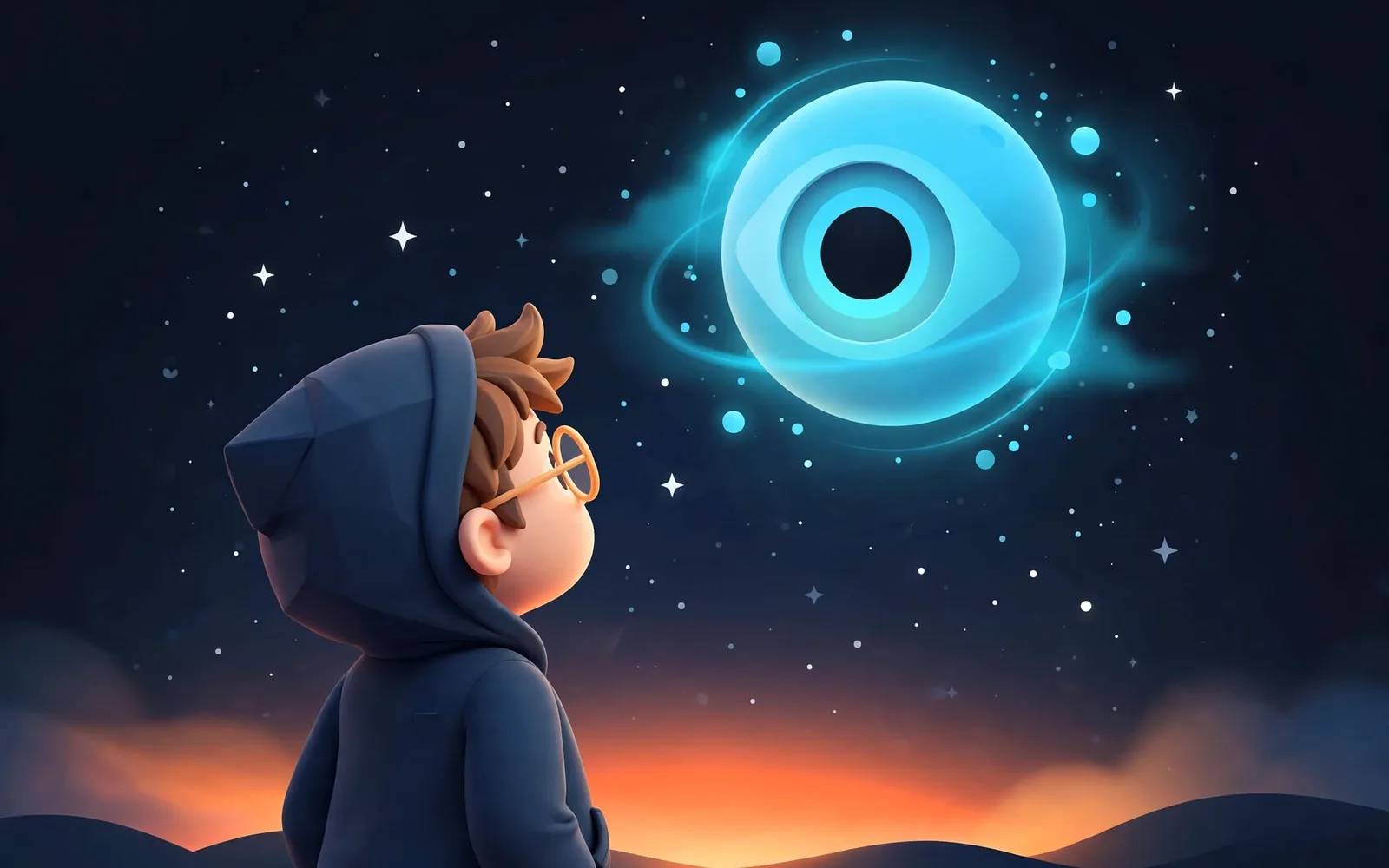
Nearsightedness in kids has nearly doubled since the 1970s and could affect half the world's population by 2050. Research shows bright outdoor light — 1 to 2 hours a day — is the most effective way to slow it, with the 20-20-20 rule helping during screen time.
Kids everywhere are squinting at the classroom whiteboard a little more than they used to. Nearsightedness — called myopia — is rising fast in children around the world, and it is rising fastest in the kids of the smartphone generation. The good news is that science has found a surprisingly simple way to slow it down, and it does not require giving up technology.
The numbers behind the myopia boom
This is not a small trend. In 2000, about 23 percent of the world's population was nearsighted. According to a landmark projection by Holden and colleagues, published in 2016, that share is on track to reach nearly 50 percent by 2050 — with close to 1 in 10 people developing high myopia, the severe form that raises the risk of glaucoma, retinal detachment, and permanent vision loss.
In the United States, nearsightedness nearly doubled between the early 1970s and early 2000s, climbing from 25 percent to 41.6 percent of people aged 12 to 54 in the national NHANES health survey, and an estimated 40 percent of American children ages 6 to 19 are now myopic. In East and Southeast Asia, the numbers are even starker: 80 to 90 percent of high school graduates are nearsighted.
Why is this happening? Blame indoor life, not just screens
It is tempting to pin the whole thing on phones and tablets. Screens do matter — but researchers say they are only part of the story. Children's eyes have barely changed genetically in 50 years, so the driver must be the environment.
The leading suspect is indoor life. When kids spend most of their day inside — reading, studying, scrolling — they miss out on bright natural daylight. Outdoor light is vastly brighter than indoor lighting (up to 100,000 lux outside versus a few hundred lux indoors), and that bright light triggers the release of dopamine in the retina. Dopamine acts as a signal that tells the growing eye to stop elongating. Myopia happens when the eyeball grows too long, so less daylight means more elongation and worse distance vision. The WHO has flagged myopia as a priority in its global blindness-prevention planning, and uncorrected myopia already costs the world an estimated $244 billion in lost productivity each year, according to a 2024 global myopia public health summit report.
The strongest evidence: outdoor time really works
This is not just theory. In a rigorous randomized trial in Guangzhou, China, published in JAMA in 2015, researchers added just 40 minutes of outdoor activity to the school day for first-graders. After three years, 30.4 percent of the outdoor group had developed myopia, compared with 39.5 percent of the control group — the outdoor kids were 23 percent less likely to become nearsighted. A systematic review and meta-analysis of many studies confirmed that more outdoor time protects against myopia onset.
Another program in Taiwan found that children who spent at least 11 hours a week outdoors had a 54 percent lower risk of rapid myopia progression, as reported by the American Academy of Ophthalmology. Based on this body of evidence, a 2024 National Academies of Sciences report recommends that children spend 1 to 2 hours outdoors every day to reduce myopia risk.
The screen-time piece: breaks matter too
Outdoor time is the star intervention, but healthy screen habits still matter. The American Association for Pediatric Ophthalmology and Strabismus (AAPOS) offers simple SCREENS guidance: no screens for children under 2 (other than video calls), at most 1 hour a day of high-quality content for ages 2 to 5, and 1 to 2 hours of outdoor time daily for all kids. Their 20-20-20 rule is easy to remember: every 20 minutes of screen time, look at something 20 feet away for 20 seconds.
Myopia myths vs facts
| Myth | Fact |
|---|---|
| Screens alone cause myopia. | Near work raises risk, but lack of bright outdoor light is the stronger driver. |
| Wearing glasses makes eyes worse. | Glasses correct vision; they do not change how the eyeball grows. |
| Myopia always stabilizes after childhood. | It usually slows in the late teens, but high myopia can progress into early adulthood. |
| Outdoor time only works if kids exercise. | Studies show it is the daylight itself, not the physical activity, that protects the eyes. |
| Kids will outgrow nearsightedness. | Myopia almost never reverses; earlier onset usually means a higher final prescription. |
A parent's eye-health checklist
- Aim for 1 to 2 hours of outdoor time daily. Walking, biking, recess, weekend outings — it all counts.
- Use the 20-20-20 rule during homework and screen time.
- Keep screens at arm's length and take regular breaks, following AAPOS guidance for younger children.
- Book regular eye exams — the American Academy of Ophthalmology recommends a first exam before age 1, a full check around age 3, and ongoing exams through the school years.
- Watch for warning signs: squinting, sitting very close to screens or books, frequent headaches, or dropping grades.
- If myopia is diagnosed, ask about myopia-control options such as low-dose atropine drops, overnight orthokeratology lenses, or multifocal contact lenses — treatments that can slow progression, not just correct vision.
The bottom line
Nearsightedness is becoming the norm for the next generation, but it does not have to be. The most powerful tool parents have is free and simple: get kids outside every day. Combined with smart screen habits and regular eye exams, outdoor time can delay the onset of myopia and slow its course — protecting your child's vision for life.
Frequently asked questions
1. At what age should my child get their eyes checked?
The American Academy of Ophthalmology recommends a first eye screening before age 1, a full exam around age 3, and regular checks through the school years — because early myopia is the strongest predictor of high myopia later.
2. Will more outdoor time help if my child already wears glasses?
Yes. The protective effect is strongest before myopia starts, but studies like the Taiwan trial found outdoor time also slowed progression in children who were already nearsighted.
3. How much outdoor time is enough?
Research points to at least 11 hours a week (roughly 80 minutes a day) as protective, with 1 to 2 hours a day the widely recommended target from the National Academies and eye-care groups.
4. Can glasses or contacts stop myopia from getting worse?
Regular glasses only correct vision. Myopia-control treatments — low-dose atropine eye drops, orthokeratology (overnight) lenses, or multifocal soft contacts — are designed to slow the actual progression. Ask a pediatric eye doctor.
5. Is high myopia dangerous?
It can be. High myopia (stronger than -6 diopters) stretches the eye and raises the lifetime risk of retinal detachment, glaucoma, cataracts, and macular degeneration — which is exactly why slowing progression in childhood matters so much.