Finsta Explained: Why Teens Keep a Second Instagram Account
A finsta is a teen's private second Instagram account for close friends. Here is why teens create one, what the risks are, and how parents should respond.
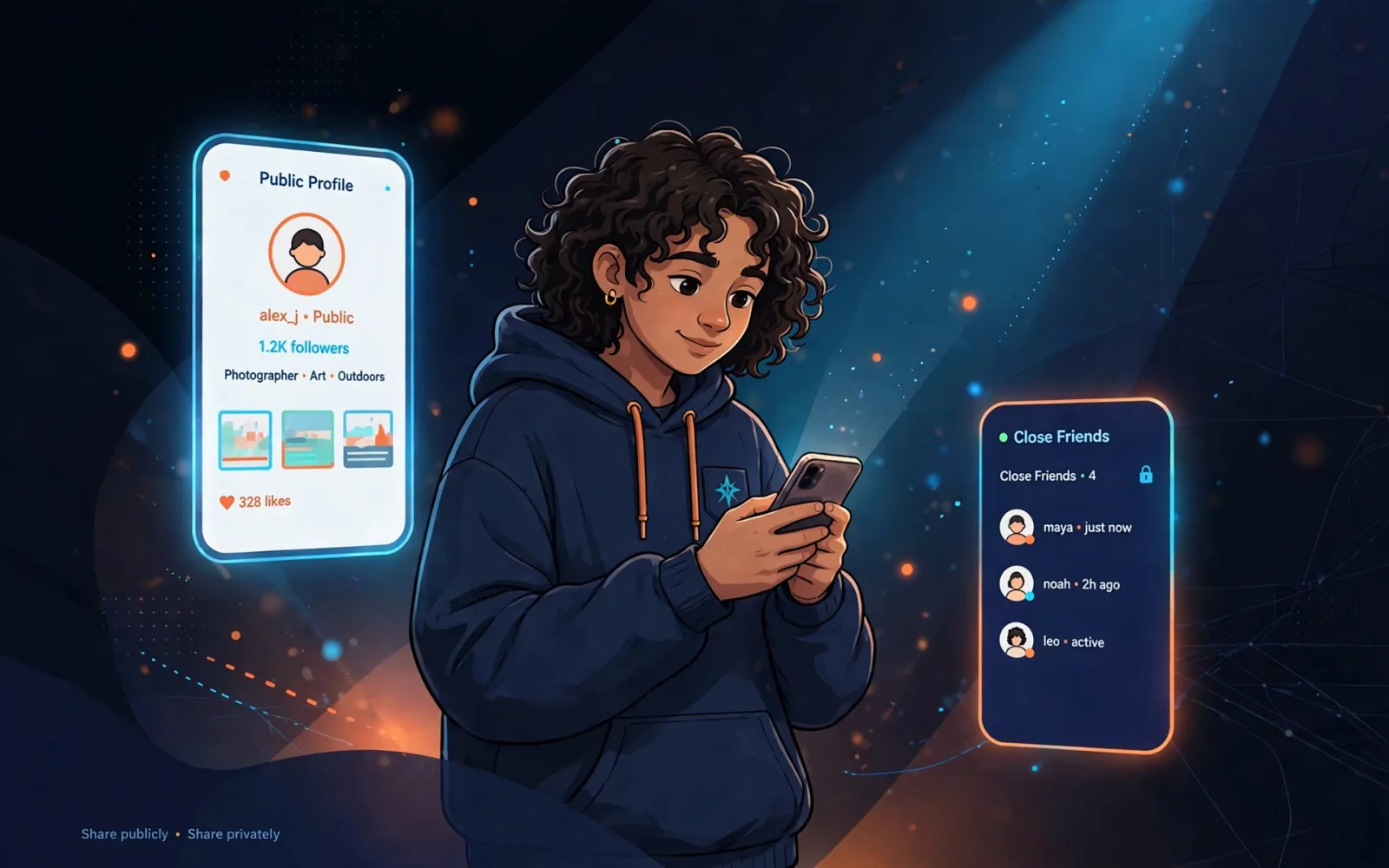
A finsta is a private second Instagram account teens use for unfiltered posts to close friends, while their main account stays polished and public. Parents should respond with shared ground rules about privacy, screenshots, and harmful content, not by demanding access or banning the account outright.
If your teenager has an Instagram account, there is a good chance they have a second one too. It is usually private, it usually has a strange username, and it is usually only followed by a small circle of close friends. Teens call it a finsta, short for "fake Instagram." The name is misleading, because for many teens the finsta feels more real than the polished main account.
A finsta is not a fake account made to impersonate someone. It is a second, personal account run by the same teenager, used for unfiltered photos, jokes, and everyday moments that would never make it onto a curated main feed.
What is a finsta, exactly?
Teens often call their main account a "rinsta," short for real Instagram: good photos and achievements chosen to look good to a wide audience. The finsta is the back room: blurry photos, silly videos, and honest captions for a handful of people.
The word itself comes from combining "fake" and "Instagram," and guides for parents describe finstas as secondary accounts that let young people express themselves differently from their primary account, with access limited to a chosen group of friends. That private, small-audience setup is the whole point: a teen is not trying to go viral on a finsta, they are trying to be normal in front of people they trust.
Instagram itself makes this easy. The app lets a user add several accounts and switch between them without logging out, and reporting on Instagram's help guidance puts that limit at up to five accounts on one device.
Why teens keep a second account
The main reason is pressure. A public profile invites comparison: who liked it, who commented, who saw it and said nothing. On a finsta, that pressure drops, and a bad photo is funny rather than embarrassing.
The second reason is control. Teens know that teachers, coaches, and relatives might one day see a public profile, so a finsta lets them decide who sees the unpolished version of their life. It is the same instinct that makes adults keep a private group chat separate from a work thread.
The third reason is honesty. In one small focus-group study of teens aged 13 to 17, participants reported an average of around 610 followers on their main account, compared with around 118 on their finsta. That small, mostly female sample in one school system should not be treated as national figures, but it illustrates the gap well: a rinsta is for the crowd, a finsta is for the circle.
How common are finstas?
This is where parents often get a surprise. Instagram is hugely popular with teens: Pew Research reported that 61% of US teens aged 13 to 17 said they used Instagram in its 2024 survey.
Surveys on secret accounts paint a consistent picture of a gap between what teens do and what parents expect. Reporting on a Common Sense Media survey found that 16% of teens had hidden duplicate accounts, and 7% said the purpose was to hide the account from their parents or caregivers. An older National Cyber Security Alliance study, cited in parent guides, found a wider gap: around 60% of teens aged 13 to 17 admitted having a secret account, while only around 28% of parents thought their child might have one.
Younger children show a similar pattern. Safer Schools, citing the UK regulator Ofcom, reported that two-thirds of 8- to 11-year-olds in the UK had multiple accounts or profiles.
Main account vs finsta at a glance
| Feature | Main account (rinsta) | Second account (finsta) |
|---|---|---|
| Audience | Wide: classmates, acquaintances, family, anyone approved | Small: close friends only |
| Style | Curated, polished, best photos | Casual, unfiltered, jokes and everyday moments |
| Username | Usually recognisable, often their real name | Often a joke name, nickname, or pseudonym |
| Purpose | Presenting a public image | Being relaxed and honest with trusted friends |
| Risk if shared widely | Embarrassment over an old post | Private jokes or complaints seen out of context |
The real risks parents should watch for
The first risk is a false sense of safety. A private account still allows screenshots, and a joke meant for five people can travel to five hundred. Teens need to hear this plainly: if you would not want it on a school noticeboard, do not post it, even privately.
The second risk is what gets posted when nobody is watching. Most finsta content is harmless, but the same privacy that allows honesty can also allow cruel jokes, gossip, or photos of other people posted without permission.
The third risk is secrecy itself. When a teen hides an account because they expect punishment, they also hide problems, and if something goes wrong they are less likely to ask for help. That is why the goal should be honesty, not surveillance. Reporting on American Academy of Pediatrics guidance stresses a family media plan, device-free meals and bedtimes, and parents modelling the habits they want to see.
What parents should do about a finsta
Start with curiosity, not an accusation: "I have heard teens often have a second, private account for close friends. Do you, and what do you use it for?" If the answer is yes, stay calm. The fact that they told you is a win.
Next, agree on ground rules together: no photos of other people without permission, no sharing locations or school details, no cruel posts about classmates, and no posting anything they would be ashamed for a teacher to see. Those rules apply to every account, public or private.
Then talk about screenshots and permanence. Explain that private does not mean deleted, and that a friend resharing a post is a predictable risk of posting online. Agree in advance that they can come to you without an automatic punishment if they need help fixing it.
You can also ask to be part of the conversation without demanding to follow the finsta. Many teens will refuse a parent follow request, and forcing it usually pushes the account further underground. A better deal is: you do not demand access to every private joke, and they do not hide problems, harmful content, or contact from strangers.
Finally, check the basics together once in a while: that the finsta is set to private, that followers are people they genuinely know, and that it is not linked to a public profile in a way that gives away their identity. A calm, joint check is very different from a surprise phone search, and teens can tell the difference.
When to worry, and when not to
Do not panic about a finsta with silly photos, school jokes, and a small circle of real friends. That is normal teenage social life moving online.
Do step in if you see posts that mock or target another child, sexual content, contact with strangers, pressure to share passwords, or a teen who becomes secretive or distressed around their phone. In those cases, the issue is not the second account. It is the behaviour, and it needs a direct, supportive conversation, and sometimes help from a school or a professional.
A finsta is best understood as a clue, not a crime. It tells you that your teenager wants a space where they can relax and be themselves. If you respond by trying to close that space, you will lose the conversation. If you respond with clear, shared boundaries, you keep something far more valuable: a teenager who will still tell you the truth about their online life.
Frequently asked questions
Is a finsta illegal or against Instagram's rules?
No. It is a second personal account, not an impersonation account, and it only breaks the rules if used to impersonate someone or harass others.
Should I demand to follow my teen's finsta?
It is usually counterproductive and drives the account further underground. Agree on shared rules about harmful content and asking for help instead.
Does having a finsta mean my teen is hiding something bad?
Not necessarily. Parent guides describe finstas as places for casual, unfiltered posts for close friends. Judge the content, not the account alone.
What age is a finsta most common?
Finstas are most associated with teenagers, and survey data on Instagram use focuses on teens aged 13 to 17, but multiple profiles are also reported among younger children.
What should I do if my teen's private post gets shared?
Stay calm, help them save evidence, and work out who shared it and how far it went. Report harmful resharing through the platform, and contact the school if classmates are involved.
Sources: Pew Research, Pew Research short read, Common Sense Media survey reporting, Safer Schools on finstas, finsta research study, parent guide on finsta risks, multiple Instagram accounts guide, AAP family media guidance reporting.