Your kid 'fanum taxed' your fries? What parents should know
Fanum tax is Gen Alpha slang for jokingly taking a bite of someone's food, and it is mostly harmless — here is what it means and how to respond.
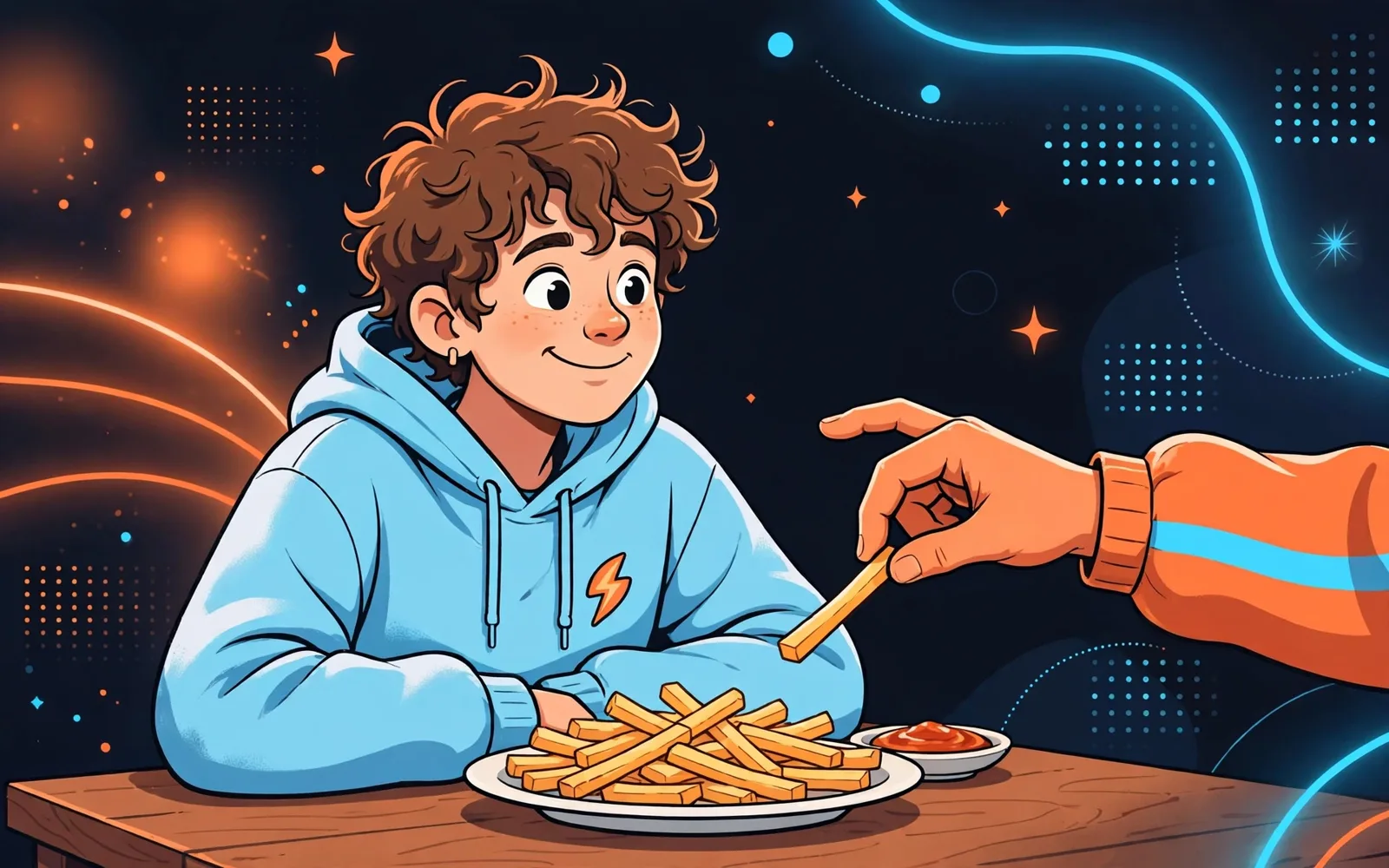
Fanum tax is Gen Alpha slang for jokingly taking a bite of someone's food, and it is mostly harmless — here is what it means and how to respond.
So your child reached across the table, grabbed one of your fries, and announced "fanum tax." It is not a real tax, and it is not rude — it is a joke from internet slang, and it is one of the friendlier ones kids use.
"Fanum tax" means taking a small portion of someone else's food, as a playful claim. The word comes from streamer Roberto Escanio, known online as Fanum. In late 2022 he ran a running gag on his streams where he would walk up to friends who were eating — including fellow streamer Kai Cenat — and claim a joke "tax" in the form of a bite or a fry. Clips spread on TikTok and YouTube, and by October 2023 the phrase went mainstream with the viral parody song "Sticking Out Your Gyatt for the Rizzler (Fanum Tax)."
Today it sits among the most-searched Gen Alpha slang terms of 2026, and kids use it in two ways. The literal way: "you got fries? fanum tax, one bite." The meme way: as a joke verb for playfully claiming anything — "that parking spot got fanum taxed."
Do parents need to worry? Not really. It is a sign your kid is comfortable joking around socially. But every joke has a line. Use it as a quick lesson: the "tax" is only funny when the other person agrees. "You can tax my fries when I say yes" teaches consent with humor. If a kid takes food after being told no, that is not slang — that is just taking someone's food, and it is fine to say so.
The best response when it happens at your table? Hand one over with a dramatic sigh. Few pieces of slang are basically a love language — this one is.