Myth: A Private Account Keeps Your Child Safe Online
A private account hides your child's posts from strangers, but it cannot stop screenshots, reshares or DMs, so real safety needs more than one setting.
Drafted with an AI writing assistant and checked against its sources by the editor before publishing. How we use AI.
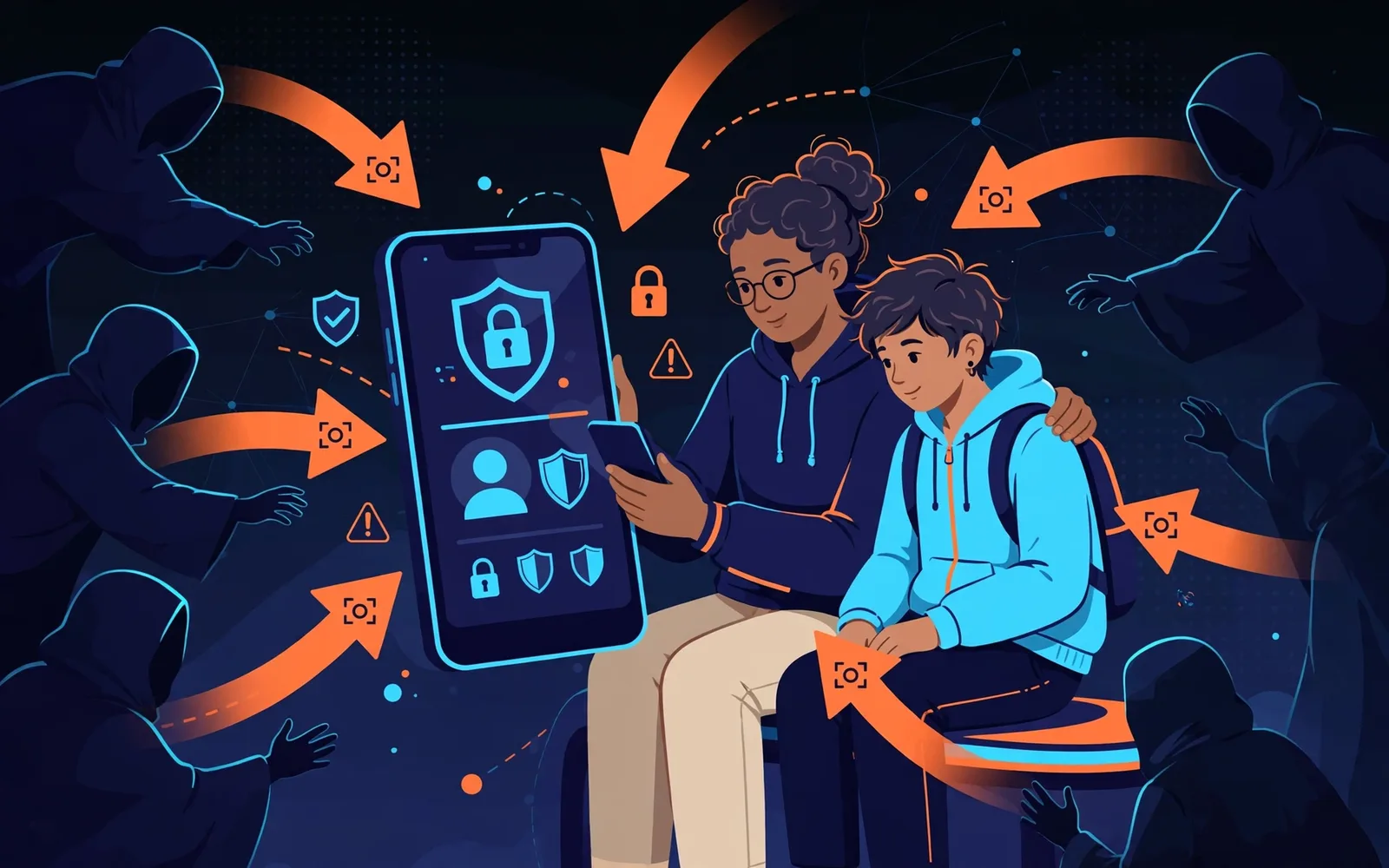
A private account hides your child's posts from strangers, but it cannot stop screenshots, reshares or DMs, so real safety needs more than one setting.
A private account feels like a locked front door. Only approved followers can see your child's photos, so many parents relax once it is on. But a private account is a fence, not a vault, and it leaves gaps strangers know how to use.
The gaps a private account cannot close
Friend requests from strangers. Anyone can still ask to follow your child, and children often accept requests from people they barely know, especially if the profile looks like a classmate. Pew Research Center found that 60% of teen Facebook users kept their profiles private, yet teens still shared more personal information than ever.
Screenshots and reshares. A follower can screenshot any post and send it anywhere in seconds, or a trusted friend can reshare it into a group chat. Privacy settings cannot stop that. Once a photo leaves the app, your child has no control over where it goes.
Open DMs. On many platforms, a private profile still allows direct messages from people who do not follow your child, and friend suggestions can put strangers in front of them. The app still collects location and behaviour data too.
The risk is real. Pew Research Center found that nearly half of US teens (46%) say they are online almost constantly, and 95% have access to a smartphone. In the UK, police recorded 7,263 sexual communication with a child offences in a single year, with 40% on Snapchat where the platform was known, according to the NSPCC. Ofcom found that 55% of children who game online play with people they have never met offline.
What actually keeps your child safer
Treat the private setting as step one, not the whole plan. Review follower lists monthly and remove people your child does not know offline. Turn off location sharing and check what the bio reveals. Talk about screenshots: never post what they would not want shared. The American Academy of Pediatrics advises setting privacy to the most secure level and agreeing safety rules for who your child can chat with. Over 175,000 children go online for the first time daily, according to UNICEF, and each one needs the same talk.
A private account helps, but it does not finish the job. Real protection is the habit of checking, talking and thinking before posting, starting with your child's digital footprint — and knowing the slang they use helps too.